Ducal wine cellar: Wine from Štajerska with a soul from Primorska
- Words by
- Kaja Sajovic
- Photography by
- Mitja Kobal, Karata Film
November 24, 2020
Words cannot describe the feeling that overcomes you as you stand next to the Ducal wine cellar above Svečina, just a stone’s throw away from Maribor and close to the border with Austria, soaking in the view of the vineyards that surround you from all sides just like in an amphitheatre.
Vines can be seen everywhere – they stretch into the valley below and touch the Austrian border on the top. Eleven hectares of Chardonnay, Pinot Noir, Italian Riesling, Rhein Riesling and Furmint.
Photo: Mitja Kobal, Karata Film
Also, the wine cellar is not your usual wine cellar. It surprises with its modern architectural design, warm terracotta colour that matches perfectly with the bright red colour of Boston ivy ascending on the concrete staircase behind the house, and large panoramic windows that offer an unforgettable view.
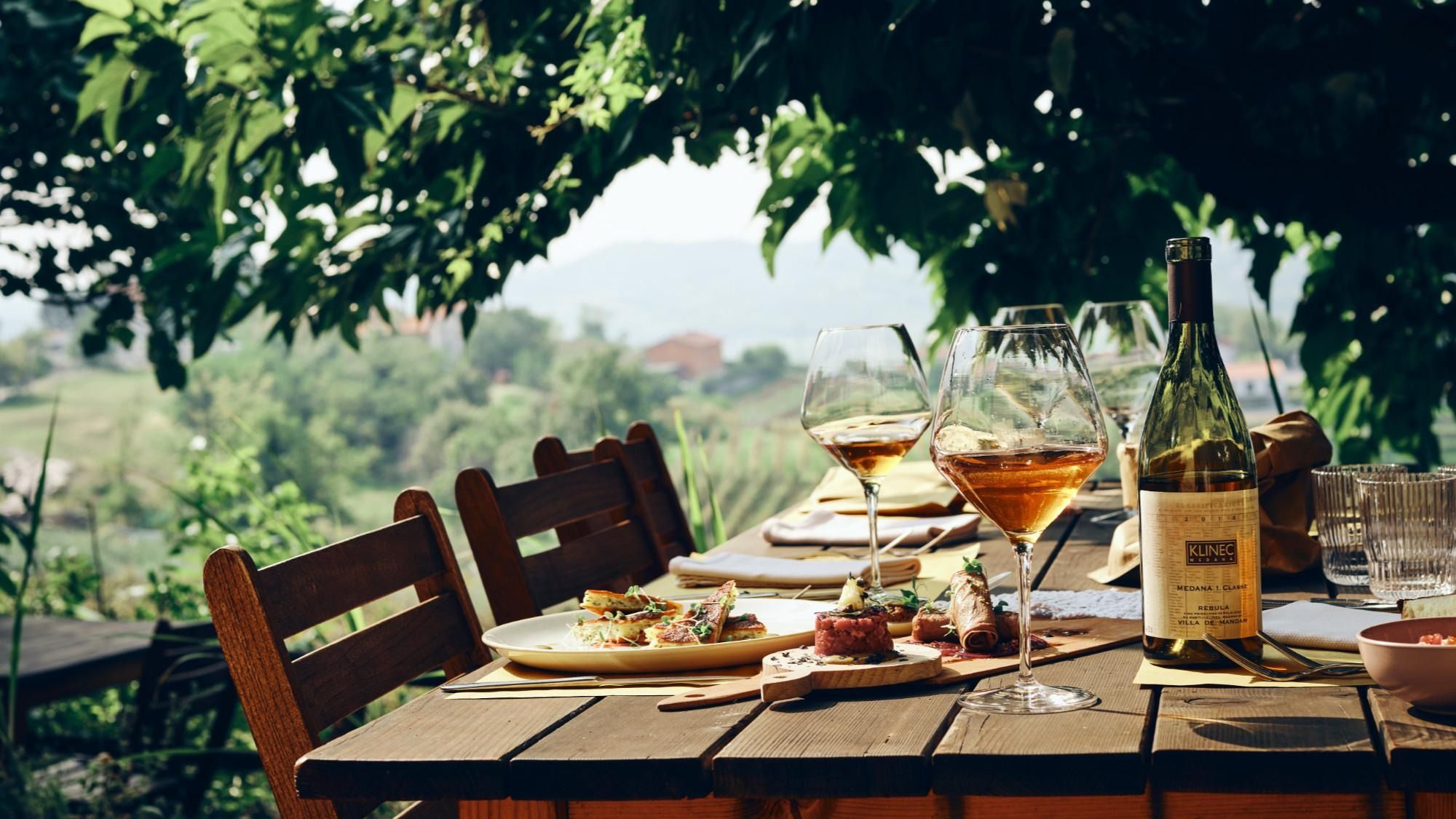
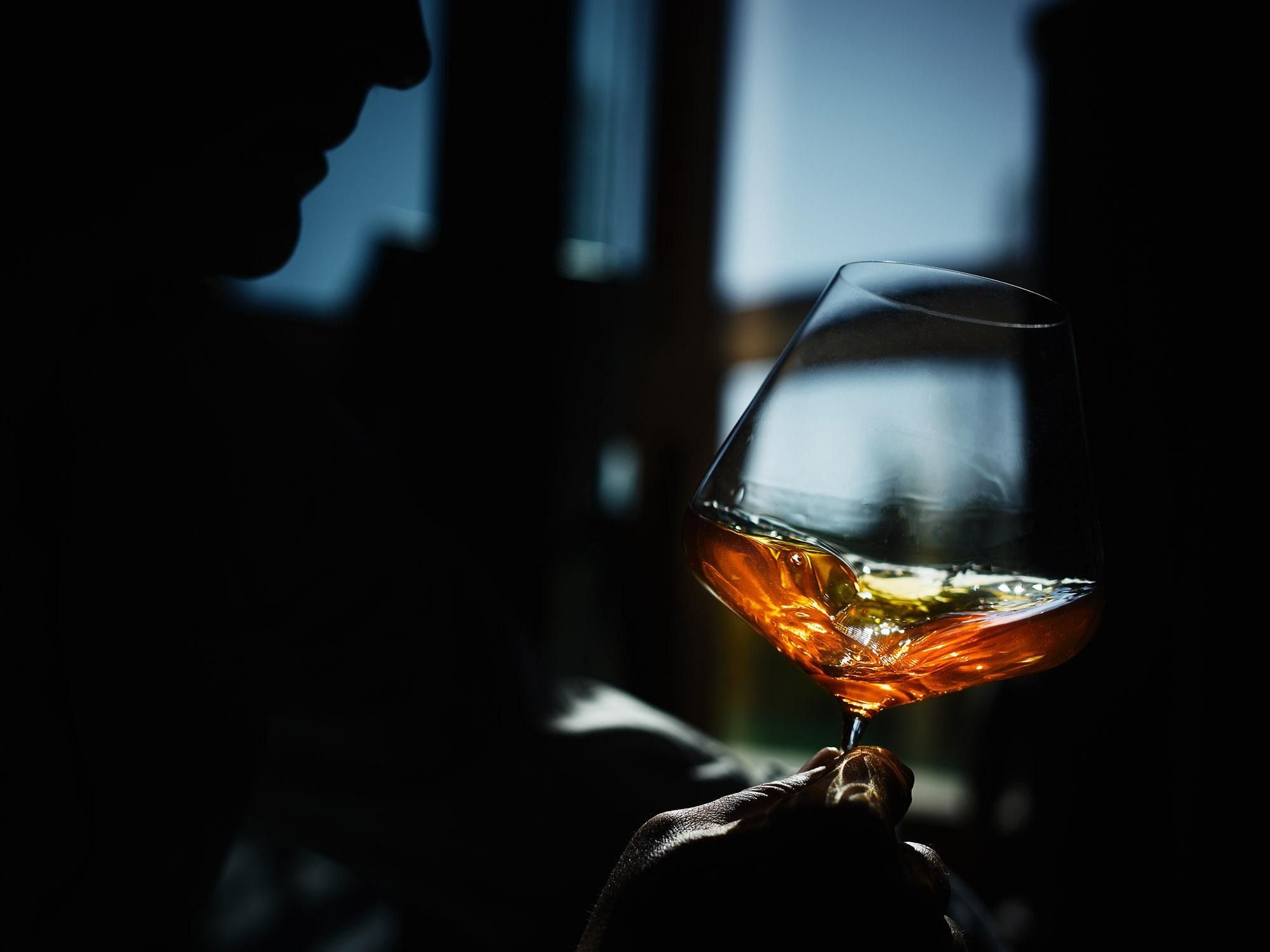
Winemaker Mitja opens a bottle of Italian Riesling from the Amfora line, vintage 2015, and smells the cork: “It’s really good.” He skilfully spins the glass in which the amber liquid swirls. He observes the colour, smells, nods with approval, and takes a sip. He puts the glass down and continues cutting cheese from Tolmin that he ages himself.
Photo: Mitja Kobal, Karata Film
The adrenalin of late harvest
He seems calm, although you can feel his mind racing. He has one eye on juicy ripened grapes on the vine at one moment, and studies the weather situation on the sky or his smartphone at the next. “Do you think it’s going to rain?”
We are well into October and most of the harvesting has been done, although Mitja keeps waiting. “For the grapes to ripen so much that the berries are completely wrinkled and not at all beautiful.” Although there is a special charm and particular flavour to this.
In this lies the exclusivity of his wine. He makes one bottle of wine from two vines. However, it is worth it. To achieve this, you must have a good deal of persistence, hard work, discipline and patience that Mitja learned from mountain climbing and we all need in these times – at work and in your private life.
Photo: Mitja Kobal, Karata Film
Duke, Satan and Kekec in one
Mitja Lo Duca is the man or better yet, the duke, which is a direct translation of his surname. He is a character who makes an impression. At first sight, he is reserved and quiet, radiating the Zen energy that matches the energy of the vineyard-dotted surroundings. However, he soon starts talking and you can feel the fire burning inside him. He firmly believes that he is right, he believes in his ideas and follows that with all his heart. People used to call him Satan after his habit of surmounting what others found impossible. He still proves it: “This is a story for everyone who whines that it’s impossible. Everything is possible if you have a vision.”
Photo: Mitja Kobal, Karata Film
He has had quite a few visions in his life and has successfully followed all of them. They used to be related to mountain climbing, which he used to do professionally. As a tribute to the mountains, the labels of Ducal wines are etched with graphics of the mountains and he named the Sontia sparkling wine after the Soča River.
Today, he divides his time between Trenta, where he runs Kekčeva domačija, and Svečina, where Ducal wine cellar reigns. “Sometimes, I finish with dinner at Kekčeva domačija, go to Svečina by car at eleven in the evening or even later, do a night shift, do a day shift and then return to Trenta for dinner.”
Photo: Mitja Kobal, Karata Film
Wines from Štajerska with a soul from Primorska
Just above Mitja’s vineyards sits the Austrian wine road, which is very popular with wine lovers. They often take a detour a few steps lower to Ducal, where they are in for a surprise. Italian Riesling produced in Štajerska is very popular in this area, as it is light-bodied, fresh, with a fruity note, it is drunk cold and is excellent as a spritzer. Mitja like the Primorska style better: full-bodied, with intensive colour and a deep flavour. Therefore, he macerates it in clay Georgian amphoras buried in the ground. Sparkling wine is made in stainless steel tanks, while other wines are made in wooden barrels and concrete eggs.
Mitja’s son Tim, who lives in nearby Maribor, keeps a daily watch over the vineyards and wine. He has a Štajerska accent, which differs greatly from that of his fathers, who hails from Tolmin, although he has an explanation for that: “As a professional footballer, I used to live in various parts of Slovenia, in Italy and most recently in Austria, and I picked up something everywhere.”
Photo: Mitja Kobal, Karata Film
He has lived in Štajerska with his family for many years. When he speaks about his two daughters, a mischievous four-year-old and a few-month-old baby, he brightens up and does not hide his fatherly pride.
Although they differ in many ways – in appearance, their chosen professional sport, accent, and many more ways, father and son have something in common – their love of wine, which proves that blood is thicker than water. Tim’s favourite among the Ducal wines is Rhein Riesling, vintage 2013. And his father picks the same. Is this just a coincidence? They both agree that this year’s Suavignon (2020) is very promising.
Photo: Mitja Kobal, Karata Film
Organic production and thousands of years old Georgian method
Ducal dry and aged wines are produced completely naturally, the vines are sprayed with certain organic sprays and only sulphur and copper are used for plant protection.
Wine is not filtered, it is only fermented on lees. Certain wines are produced in kvevris (clay amphoras) buried in the ground, where grape berries with their skins are fermented, and then the wine is macerated for eight months. This is followed by squeezing and pouring into large wooden barrels in which the wine ages for two to three years, after which it is bottled.
Photo: Mitja Kobal, Karata Film
Wine cellar with an artistic touch
Mitja fell in love with the vineyards in Svečina in 2007. At that time, he received an award for the best tourist product in Maribor for Kekčeva domačija, and fell in love with an old wine cellar dating back to 1700. Although Mitja tore down the old house he preserved the cellar, restoring it with the original bricks, and build a new one.
A walk through the house is reminiscent of a walk through a modern gallery, as rooms burst with interesting details and the stories they tell. For example, an Italian designer light is set above the counter in the tasting room, which Mitja bought in Ljubljana in a store, managed by his friend Andreja. “I have a sense of aesthetics and am very interested in interior design. My Italian roots are probably to ‘blame’. I like reading Italian interior design magazines, from which I get ideas and realised them – by myself or with the help of architects.”
Photo: Mitja Kobal, Karata Film
A speaker made by Mitja’s friend Miloš Horvat sits on the old Lauberger & Gloss upright piano, which used to belong to Alfonz Breznik, a court expert and a teacher at Glasbena Matica. Modern technology is hidden by its retro appearance. Relaxing jazz comes from the speaker, maintaining the atmosphere.
The wine cellar can be entered through a glass door and each step is accompanied by a play of light and shadows, the old and the new, and masks, black, white, concrete or iron faces made by the artist Primož Pugelj: “Primož is my friend and my favourite sculptor.”
It is composed of several rooms – the old cellar with wooden barrels, which makes an impression with arched ceiling, a section of concrete eggs, and a special room with four amphoras buried in the ground Everything is perfected to the last detail and carefully made, even the wall with a cast basin and the golden Ducal logo. Just when you think there are no more surprises, a concrete wall opens up, hiding a not even remotely modest room filled with bottles of sparkling wines. There is even a touch of art – Pugelj’s free-standing sculpture Divided.
Photo: Mitja Kobal, Karata Film
Ducal in global cuisine
Mitja does not hide his pride when he speaks about his wines, which surprise wherever they appear – in Paris, China or at home in Slovenia. Connoisseurs are amazed over and over again that someone can make first-class, interesting, different wines without any prior knowledge of wines. And in such a short time.
“The beginnings were tough. I would study, taste and experiment, and at night I would lie on the floor of the current tasting room, reading literature on wines and their production. Svetozar Raspopović Pope, the owner of As Restaurant, was the first person to believe in my story at the time when wines from Primorska were more popular in Ljubljana. Pope has encouraged me since the beginning.”
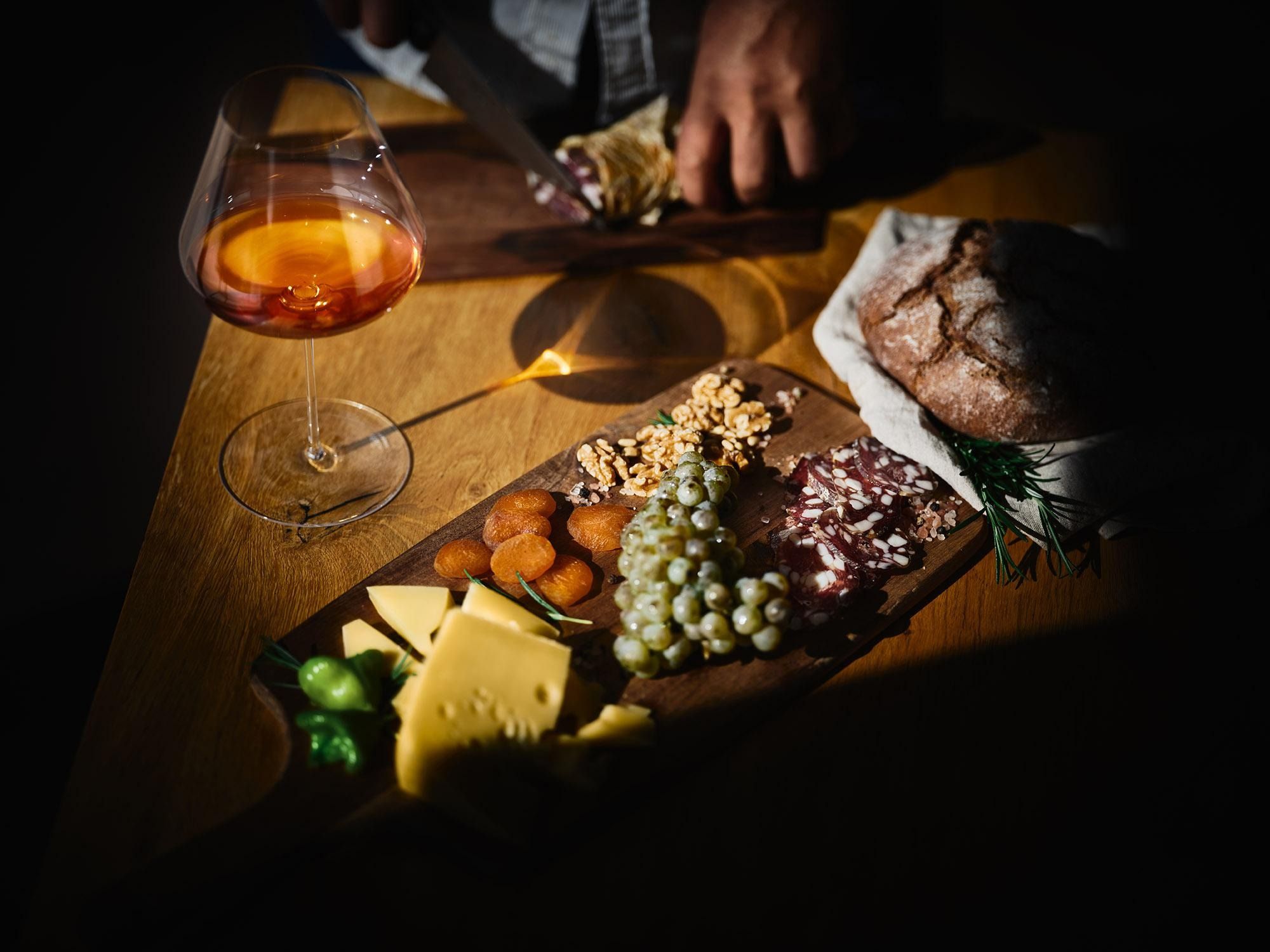
Photo: Mitja Kobal, Karata Film
Today, Ducal wines are classified as great wines, as they are included on the wine lists of top restaurants, even Michelin-starred restaurants, at home and abroad, including Hiša Franko, Hiša Denk, As Restaurant, JB Restaurant[VV1] , Danish Noma, Italian Agli Amici, and numerous others.
The Duke, full of ideas, also realised his vision of exclusive wines and boutique products and services in Svečina, which includes dinner among vines during which you can observe the chef preparing your food, swim in a pool with a view of the extensive vineyards and spend the night in a house on the roof of the Ducal wine cellar.
Photo: Mitja Kobal, Karata Film
Photo: Mitja Kobal, Karata Film
Photo: Mitja Kobal, Karata Film
01/03
Stories