
Zeleni gaj: A Prekmurje feast at the end of the (Slovenian) world
- Words by
- Kaja Sajovic
- Photography by
- Suzan Gabrijan
July 29, 2022
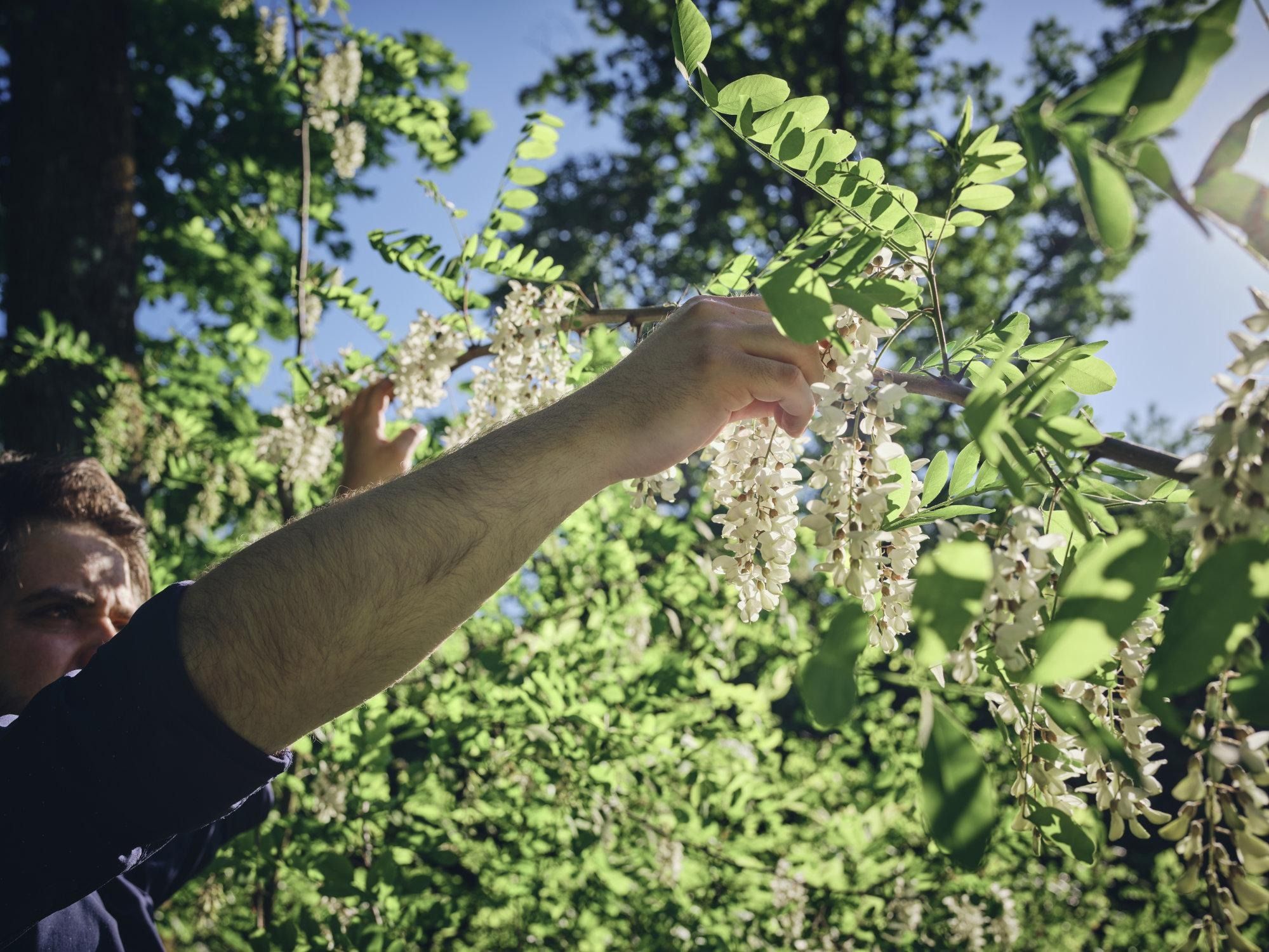
We found Boštjan Berke squeezing out the soaked elderflower blossoms, which had been in full bloom that week in this far end of Slovenia, on the edge of the Prekmurje hills. This is just before the landscape flattens and the road leads on towards Hungary, where the team sometimes goes to buy painted pottery.
“Yesterday I made 100 litres of elderflower cordial, today I made cordial from acacia flowers – an experiment. Here, try some,” he said as he handed me a small brandy glass of the clear, sweet nectar.
Photo: Suzan Gabrijan
Zeleni gaj (Green grove) seems to be an appropriate name not only for this family restaurant near the village of Fokovci, but for this region in general, swaying to Prekmurje’s lazy rhythm, somewhere between the yellow ears of cereals and the acacia-lined avenues, between the edges of forests and the soft meanders of the Mura river, between orchards and the bell-towers of churches.
Ivanovci, Panovci, Berkovci, Prosenjakovci, Kančevci, Fokovci, and so on. Typical Prekmurje village names, through which the road leads to an unassuming building, embellished only with empty wine bottles and a few hunting trophies belonging to Boštjan’s father.
The restaurant shelves are crammed with books such as In the Tracks of the Slovenian Hunter, Curative Treatments in the Forest, Hunting Trophies in Slovenia and The Slovenian Hunting Manual, while the walls are adorned with slightly mystical hunting landscapes. Boštjan would supposed to become a hunter too, but rather than follow in his father’s footsteps, he took after his mother and ended up at the stove.
Photo: Suzan Gabrijan
Land of langaši, dödoli and gibanica
Mother Berke continues to be an integral part of the restaurant. Although she recently retired from the kitchen, Boštjan still turns to her for advice – and recipes. Zeleni gaj is not a destination if you are seeking tiny morsels, convoluted amuse-bouche bites, foam and other delicate acrobatics of fine dining.
This is a farming region with agricultural traditions and proper food, with portions that could feed an army. When you go to Prekmurje, best abandon any illusions that you’ll still be able to fasten your belt on leaving. This is the land of fried langaši, dödoli dressed with sour cream, pumpkin-seed oil, bograč, gibanica and retaš.
Photo: Suzan Gabrijan
Photo: Suzan Gabrijan
Photo: Suzan Gabrijan
Photo: Suzan Gabrijan
01/04
All this is served on Zeleni Gaj’s traditional red and white tablecloths. The dishes arrive at carefully timed intervals, slowly building up the meal, beginning with the freshly baked braided milk bread, which Boštjan slices in front of you, before setting alongside it a plate with rinds of onion, grated horseradish, and a tray full of baked pig’s blood.
“Blood, eggs, a little flour, roasted onion, garlic, salt, pepper and allspice. That’s it,” Boštjan explains the recipe while cutting the almost completely black omelette and assembling a sort of hearty, rural sandwich on the braided bread slices.
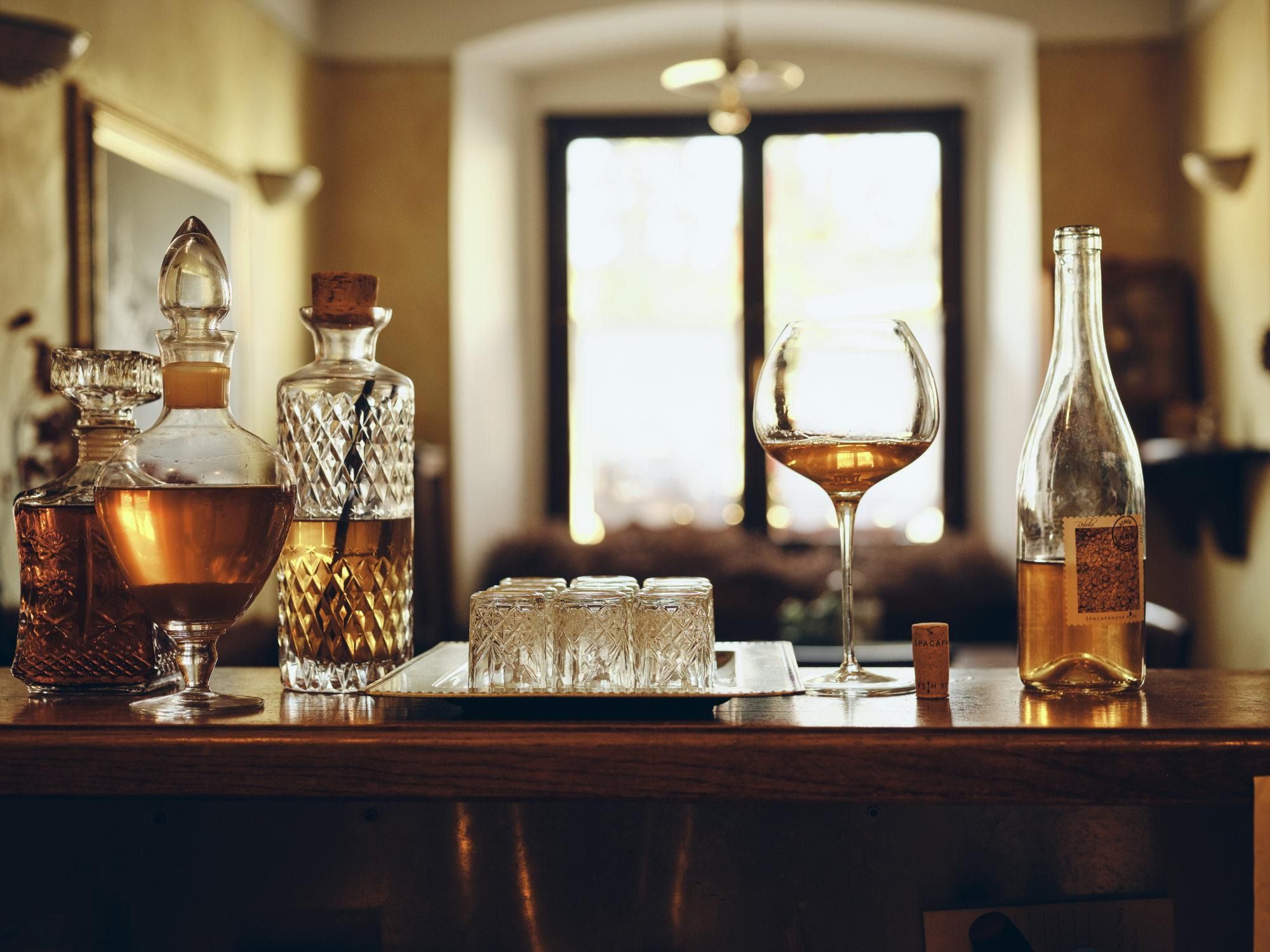
While serving, mixing, beating and roasting, he still finds time to fill up glasses with whatever his guests are quenching their thirst with – elderflower cordial, the naturally sparkling Pet-Nat Jurka from LendWines (a wine-cellar in Lendava), or some rare, amber-coloured and biodynamically produced delight.
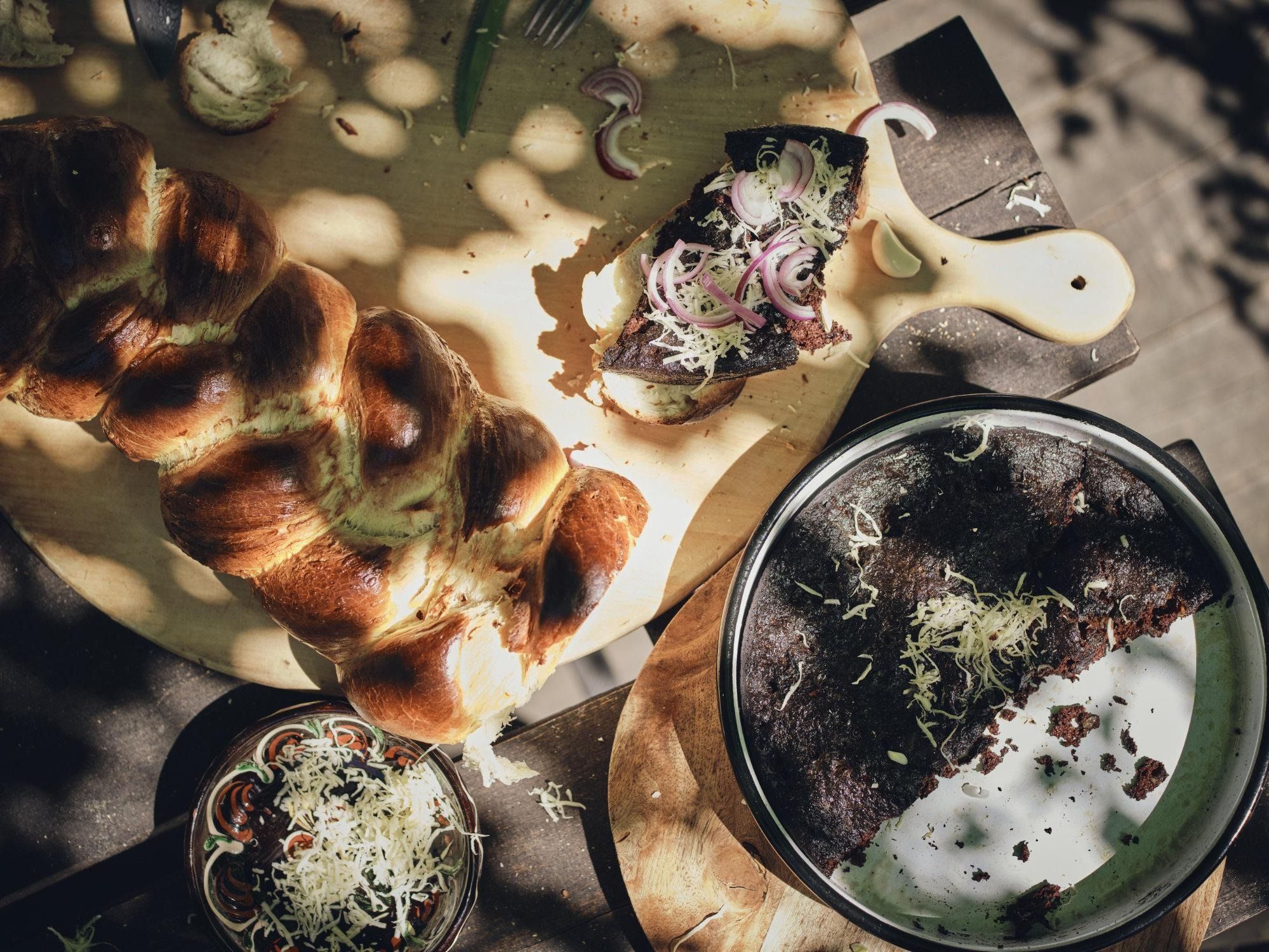
Photo: Suzan Gabrijan
Nostalgia for simpler times
Everything in Zeleni gaj inspires the feeling of home, with a relaxed tempo and nostalgic atmosphere of simpler times, the times of grandma’s kitchen and childhood, back when we lived in another country. The shelves are adorned with old radios, beehive panels, earthenware potica moulds, antique irons over a century old, and jar upon jar filled with peppers, chillies and so on. Whatever nature and the garden have given that season.
Photo: Suzan Gabrijan
A heavy red curtain leads to a smaller, more intimate dining room, above the entrance to which hangs a faded portrait of Josip Broz – Tito. A pile of books, that maybe no one looks through any more, includes a Slovenian telephone directory from 1986. Berke’s birth year.
Behind the bar, there is a stack of red-white enamelled EMO pots, majolicas are used as lampshades, and freshly gathered flowers are placed in ceramic bottles that once contained Šuman’s “Moondrops” wine.
Photo: Suzan Gabrijan
Rather than being just another restaurant, Zeleni gaj gives the impression of being Boštjan Berke’s hobby. He truly invests all his passion and enthusiasm in this family business, and runs everything confidently with a small team of only four people.
Considering what’s served – whole platters of delicious, slowly and carefully prepared dishes – you’d never guess this. Their serving of calf’s liver would be reason enough to drive up to Zeleni gaj. That’s how exceptional it is. “Yes, that’s mum’s recipe,” laughs Boštjan, as he sets down in front of us a porcelain plate of steaming, thinly sliced, stewed liver.
Photo: Suzan Gabrijan
“What’s the secret? Red pepper, marjoram, bay leaf and white wine – but careful, they must not be swimming in it!” Boštjan instructs me. “We cook the liver in pig fat and with onion, until it practically caramelises. That makes a difference too.”
He serves the liver with extra-creamy mashed potatoes, so it all combines in your mouth to produce a truly decadent dish, and we haven’t even reached the main course. It’s not until the oven bell rings that the true feast begins.
We have rabbit stew with carrots, prunes and spices, chicken roasted in pig fat, and to top it all delicious pork ribs with a criss-crossed, crunchy golden crust, with a thick layer of fine fat and a heap of dödoli, dressed with cream and onion.
And for the finale, we have corn cake made with spelt flour and two types of apples (Prekmurje yeast dough roll) – with walnuts, plums and poppy seeds. “Jurka or Williams pear brandy?” asks Boštjan, with two tempting bottles of their homemade brandy in his hands. Both?
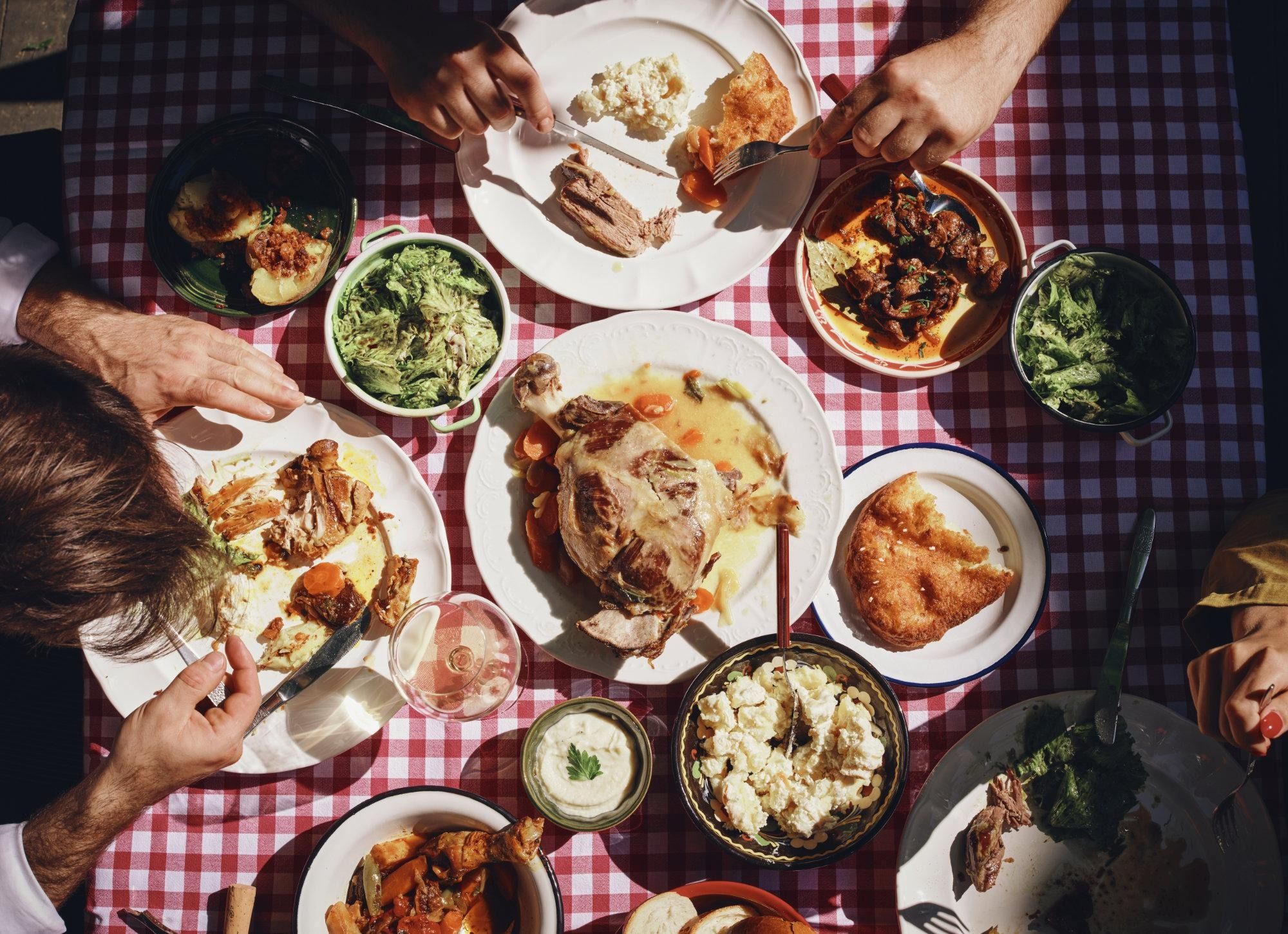
Photo: Suzan Gabrijan
Produce from an organic, social farm
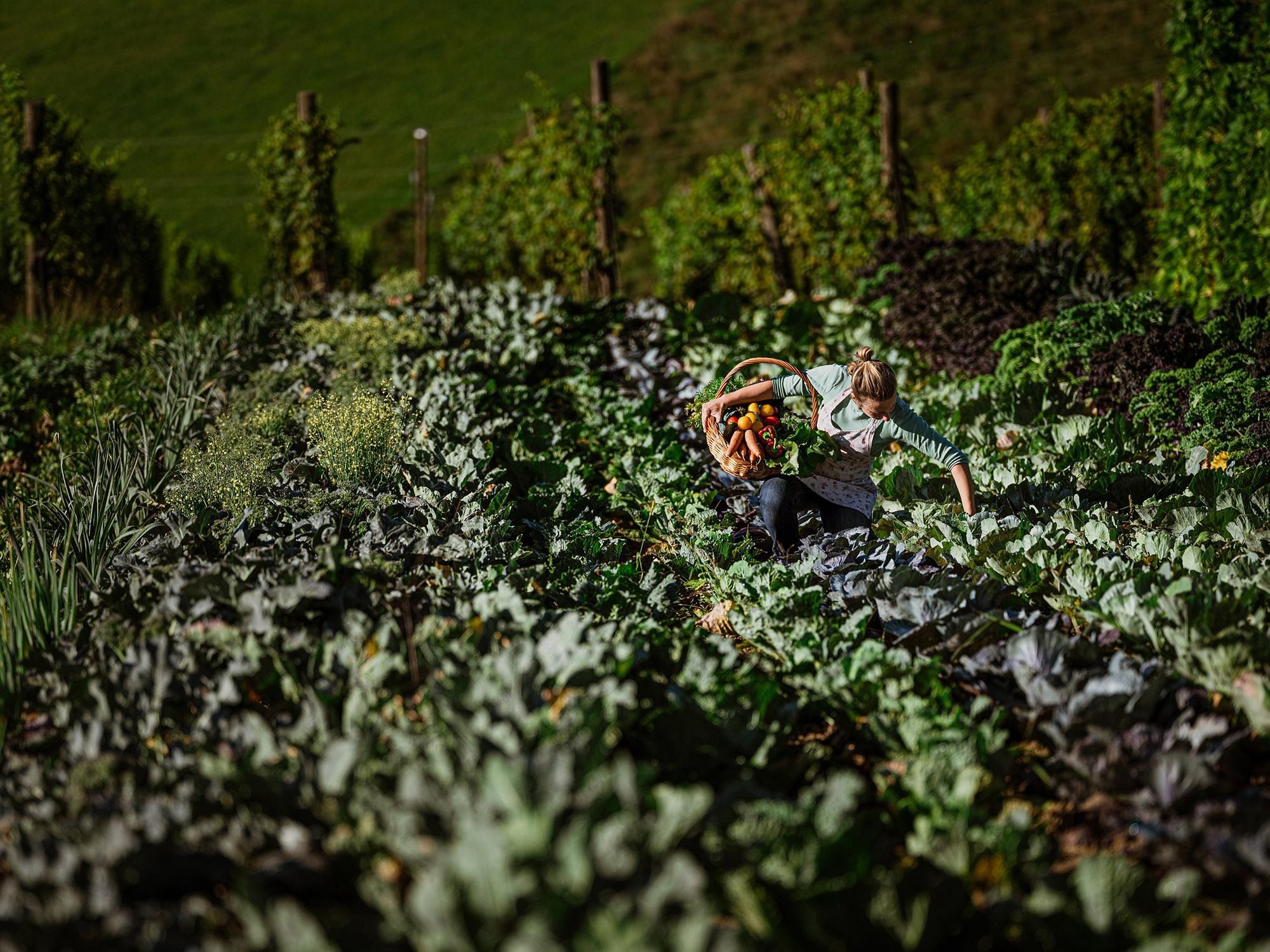
Practically everything he serves, he gathers or produces himself. A nearby farmer helps him with the pigs, and some of the vegetables come from Kocljevina, an organic, social farm only 10 minutes’ drive away, right by the border with Hungary.
Everything there, including parsnip, celeriac and lettuce, grows in the large garden, situated at the edge of a forest. There are also lush herb bushes and clumps of lavender, flowering camomile and violet chive blossoms, lungwort and bright red strawberries. Not only are all the vegetables at Kocljevina produced in a strictly organic way, the farm also plays an important social role, as it mainly employs vulnerable social groups (older people, ethnic minorities, persons with disabilities, people with psychological problems, addicts, etc.), and the employees gain valuable knowledge about organic farming, processing and seed production.
Photo: Suzan Gabrijan
We are greeted by one of the employees: “Are you hungry, would you like some turnip?”
“We’ve just eaten,” I reply, shaking my head.
“Then some fries!” she proposes, with a voice that simply cannot be turned down, and we’re soon served a tray brimming with freshly fried acacia flowers. Boštjan laughs, shrugs his shoulders and bites into the late spring delicacy.
“Here, you also ordered this,” she says in farewell, handing him a paper bag of lovage through the car window, and its aroma fills the whole car. Zeleni gaj truly seems more like a state of mind than a restaurant.
Photo: Suzan Gabrijan
Stories
Similar stories
View all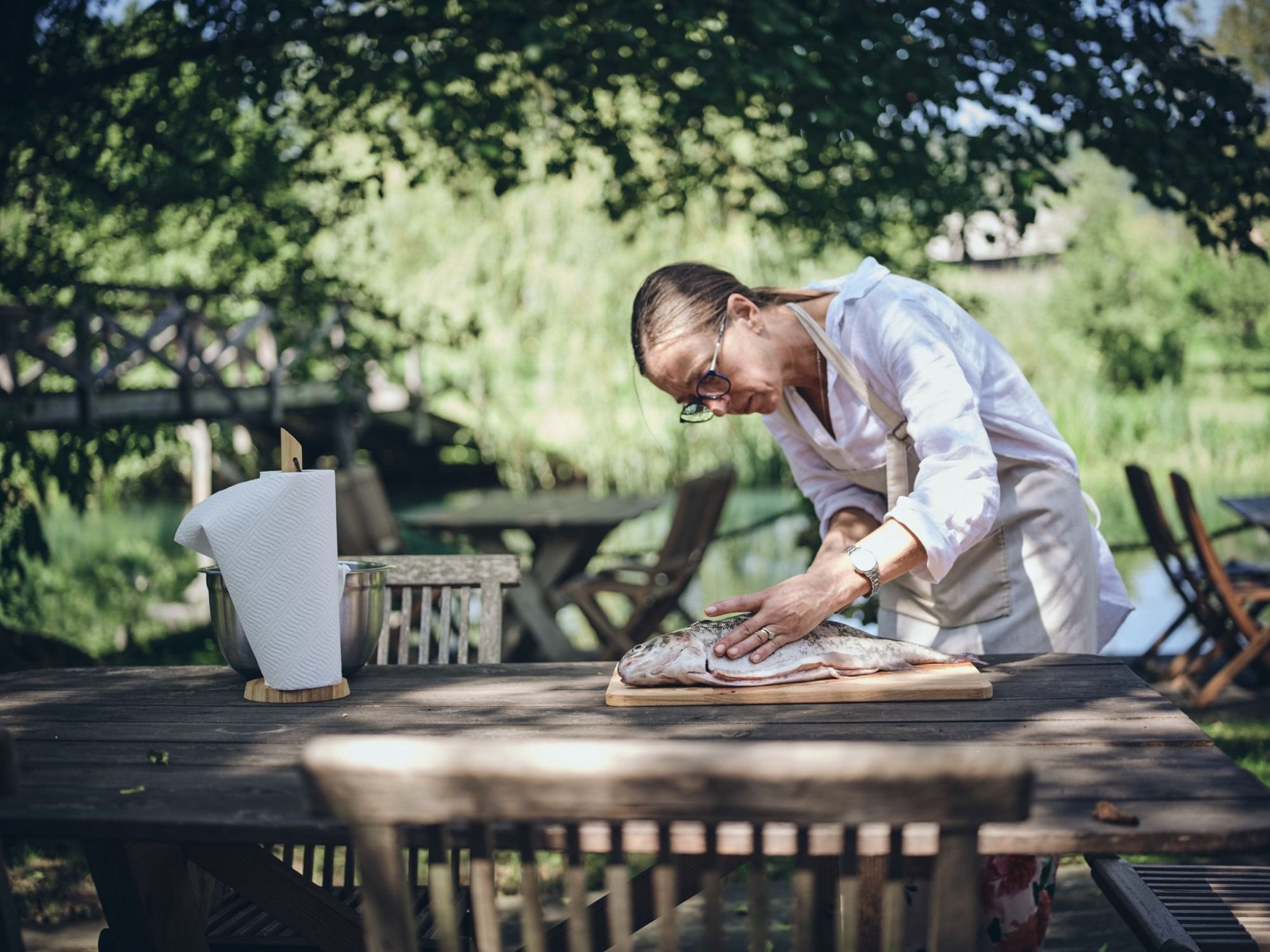
Thermal Pannonian Slovenia
Domačija Javornik: By the Krka river, offering trout straight from the water to your plate
Alpine Slovenia
Tourist farm Urška: Boutique farm in the heart of the Pohorje slopes
Mediterranean & Karst Slovenia
Špacapan House: The gems of the Karst, on red soil between pines and vines