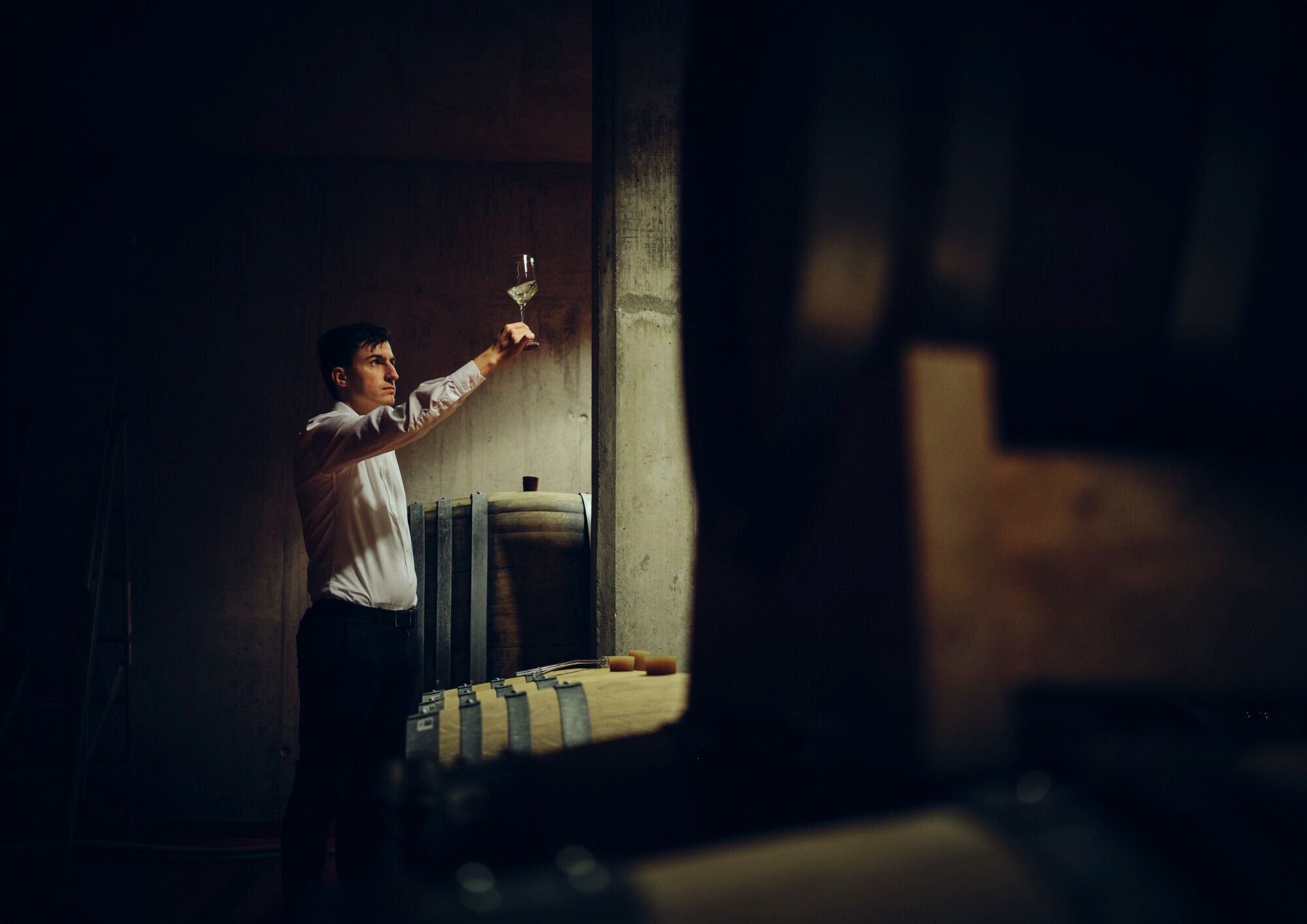
Gjerkeš: A story of wine and cuisine in the heart of the Goričko region
- Words by
- Kaja Sajovic
- Photography by
- Suzan Gabrijan
October 23, 2025
Mist wraps around the gentle hills and forests, cloaked in autumn's colours. The bare vineyard surrounding the Gjerkeš estate in Rogaševci is settling in for its winter slumber.
The Gjerkeš family first earned their reputation as exceptional winemakers from the Prekmurje region. The vineyard, which fully surrounds the estate and now covers two hectares, was planted in 1992 by Matija and Hilda Gjerkeš. The couple took over the farm—set to celebrate its 100th anniversary next year—and lovingly restored it, preserving all the hallmarks of a traditional farmhouse. Their dedication was even honoured with a first prize from Vestnik newspaper for the most beautifully renovated house.
Photo: Suzan Gabrijan
Matija Gjerkeš took up winemaking as a hobby, but he always produced high-quality wine—never in bulk, always bottled.
A cool Alpine-continental climate, softened by the gentle influence of the Pannonian Plain, along with surrounding forests, plenty of sunshine, and cool, moist nights, gives the wine its unique terroir. Today, the third generation carries on the winemaking tradition. In 2007, the estate was taken over by their son, Leon Gjerkeš, together with his family. He built a modern cellar and tasting room, marking the beginning of an ambitious new chapter for the Gjerkeš winery—now continued by his son, Matic.
Photo: Suzan Gabrijan
Photo: Suzan Gabrijan
Photo: Suzan Gabrijan
Photo: Suzan Gabrijan
01/04
But the ideas of the 28-year-old trained restaurateur and sommelier were even more ambitious. “Yes, I wanted a restaurant. I wanted the whole experience in one place—a boutique wine cellar, a restaurant, and lodging,” he adds. “Partly because we’re so remote from everything.
I always said, if I’m going to do this, I want fine dining. And that means building a proper kitchen team. I felt the Prekmurje region was missing something like this. And the guests confirm that I was right.”
This new chapter of the Gjerkeš estate began in 2022, when the old farmstead was upgraded with a spacious, modern complex featuring seven guest rooms and a restaurant—with a clear ambition to go far beyond the standard Slovenian wine cellar experience.
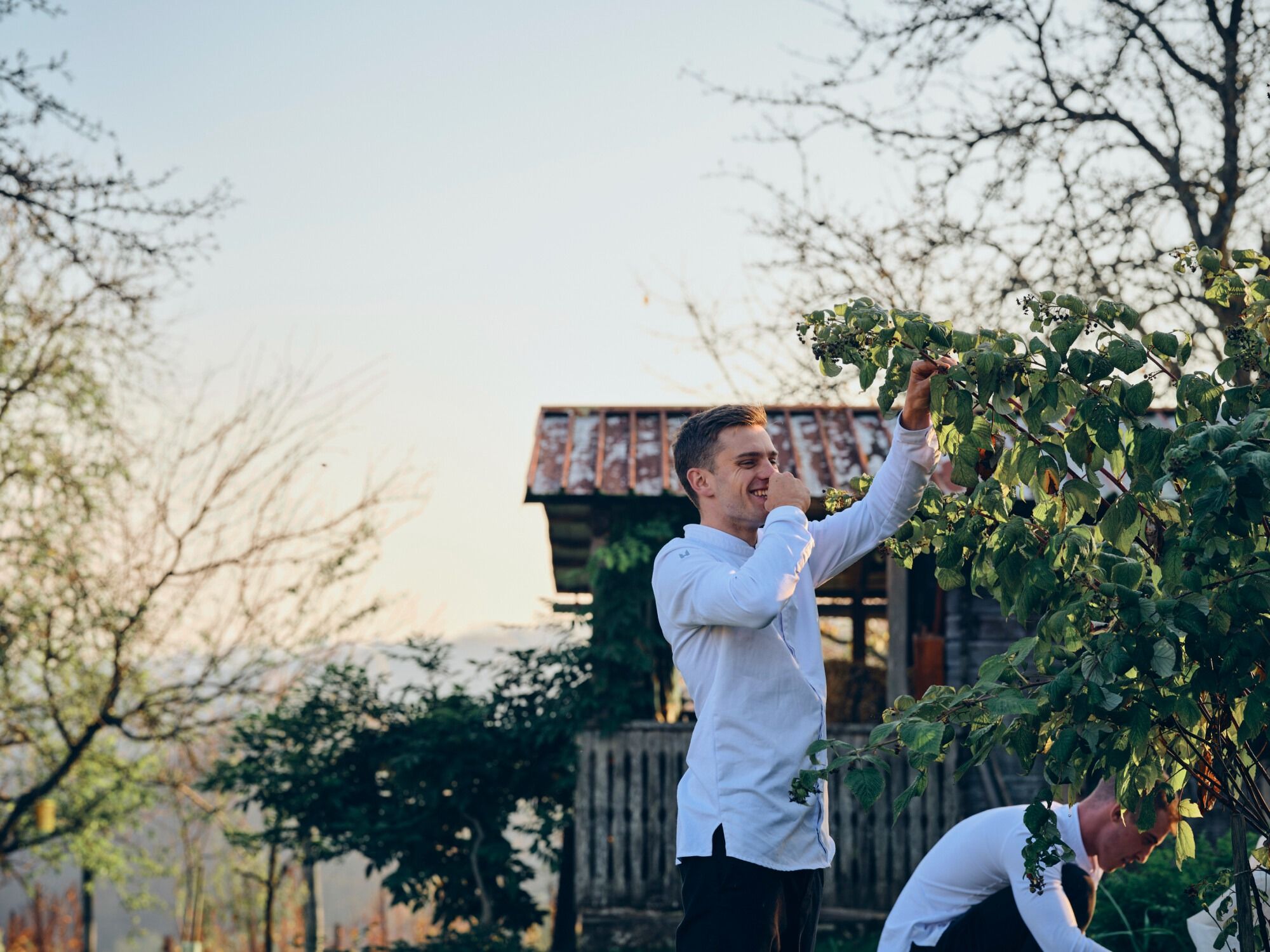
Photo: Suzan Gabrijan
But before the Gjerkeš family could gain recognition as an outstanding restaurant, they first needed to build the right team. Matic found a crucial partner in his former roommate, Rok Smonkar. Together, they honed their culinary skills at the Jezeršek House of Culinary Arts.
Smonkar then continued his education at the renowned Alma Hospitality Academy in Bra, Italy. His career path later took him to South Tyrolean chef Norbert Niederkofler at St. Hubertus, a three-Michelin-starred restaurant. Smonkar spent two years at this renowned Dolomite institution, deeply immersed in the “Cook the Mountain” philosophy, before returning home to pursue new challenges.
He made his way to the Gjerkeš estate to pay them a visit and take a look at their wine cellar—and he ended up staying. He was joined in the kitchen by sous chef Matic Branda, who refined his culinary skills at the renowned Hiša Franko restaurant. Meanwhile, Matic Gjerkeš oversees the restaurant’s service and wine program.
Photo: Suzan Gabrijan
Photo: Suzan Gabrijan
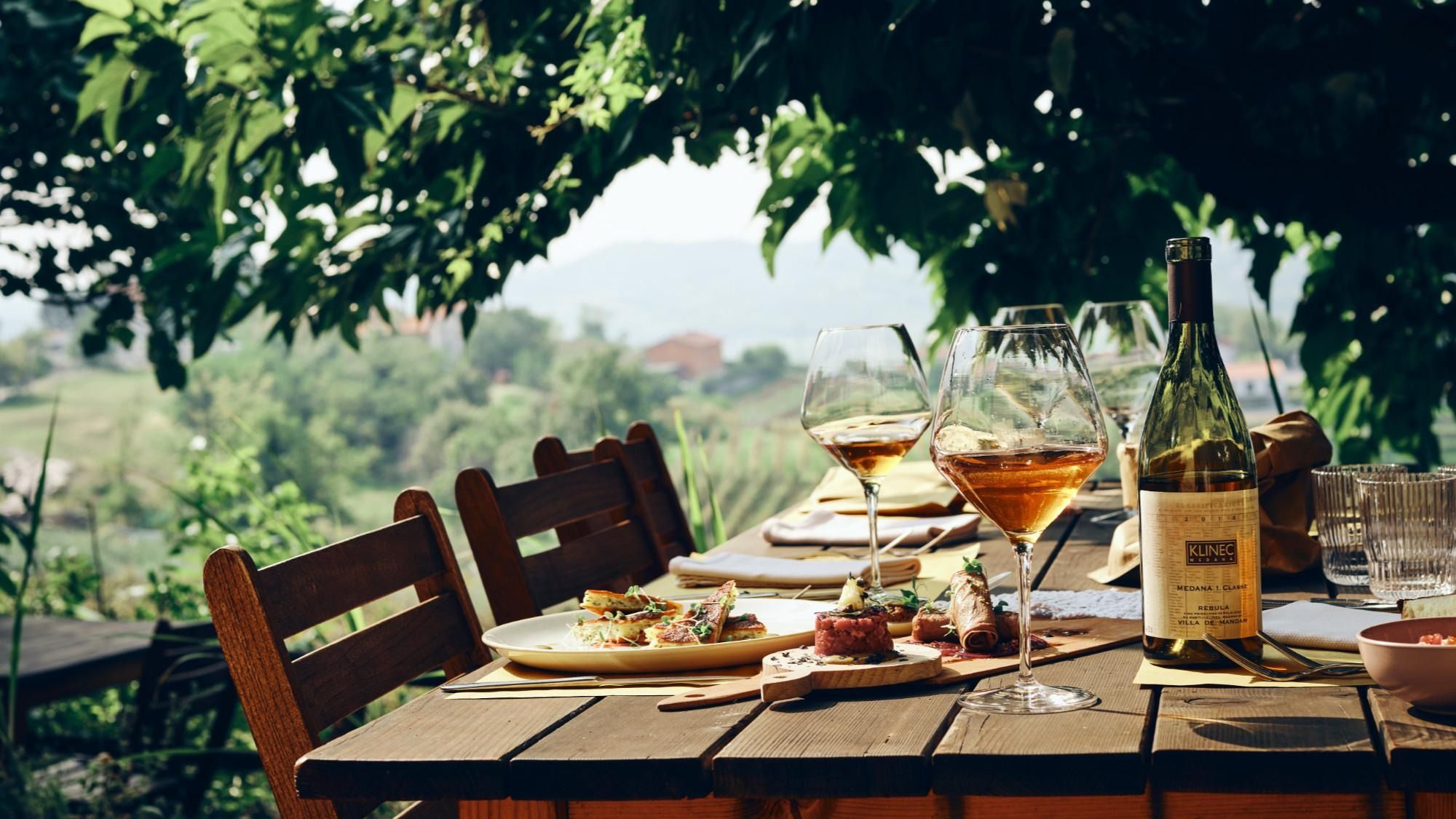
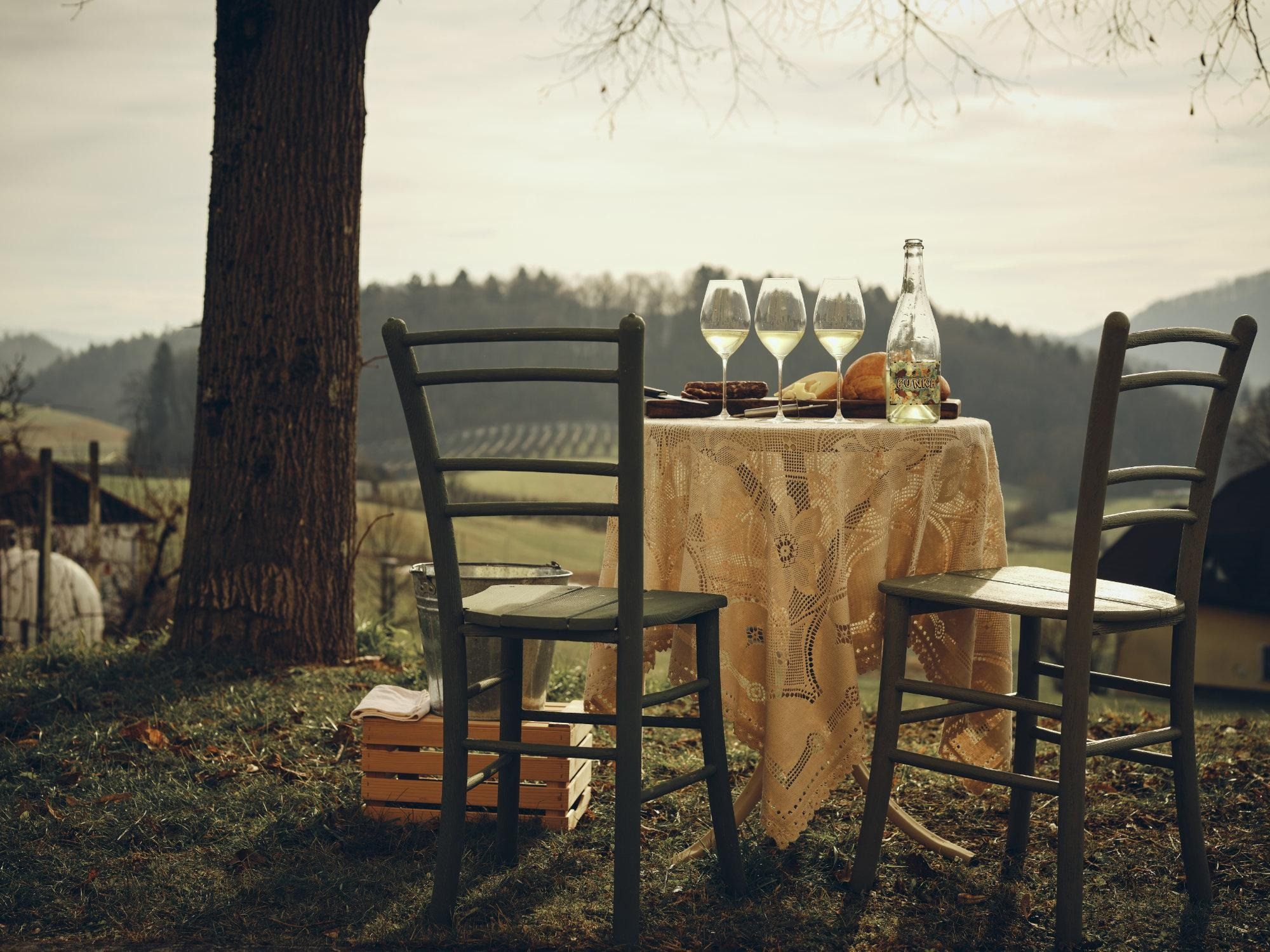
“More and more guests come here just for the restaurant—some don’t even know we originally started as a wine cellar. People are always genuinely surprised when I offer them our own sparkling wine,” says Matic, smiling as he pours the Chardonnay-based nectar into our glasses. The Gjerkeš family cultivates five white wine varieties in their vineyard—Riesling, Welschriesling (Laški Rizling), Pinot Gris, Chardonnay, and Yellow Muscat—with their premium wine, Woodstock, maturing in three different barrels. A few years ago, they also redesigned their label—now golden, just like the wine they pour in the glasses.
Photo: Suzan Gabrijan
But the restaurant doesn’t limit itself to their own wines—partly because they only produce white varieties. “Truth be told, we can’t offer the best possible experience with just our own wines. We’re very open to other varieties,” says Matic. They source wines from winemakers within a 30-kilometer radius on both sides of the border. One of the most important partners is the nearby Marof estate, but they also collaborate with around ten Austrian wineries—all located within 20 kilometres of the village of Rogaševci.
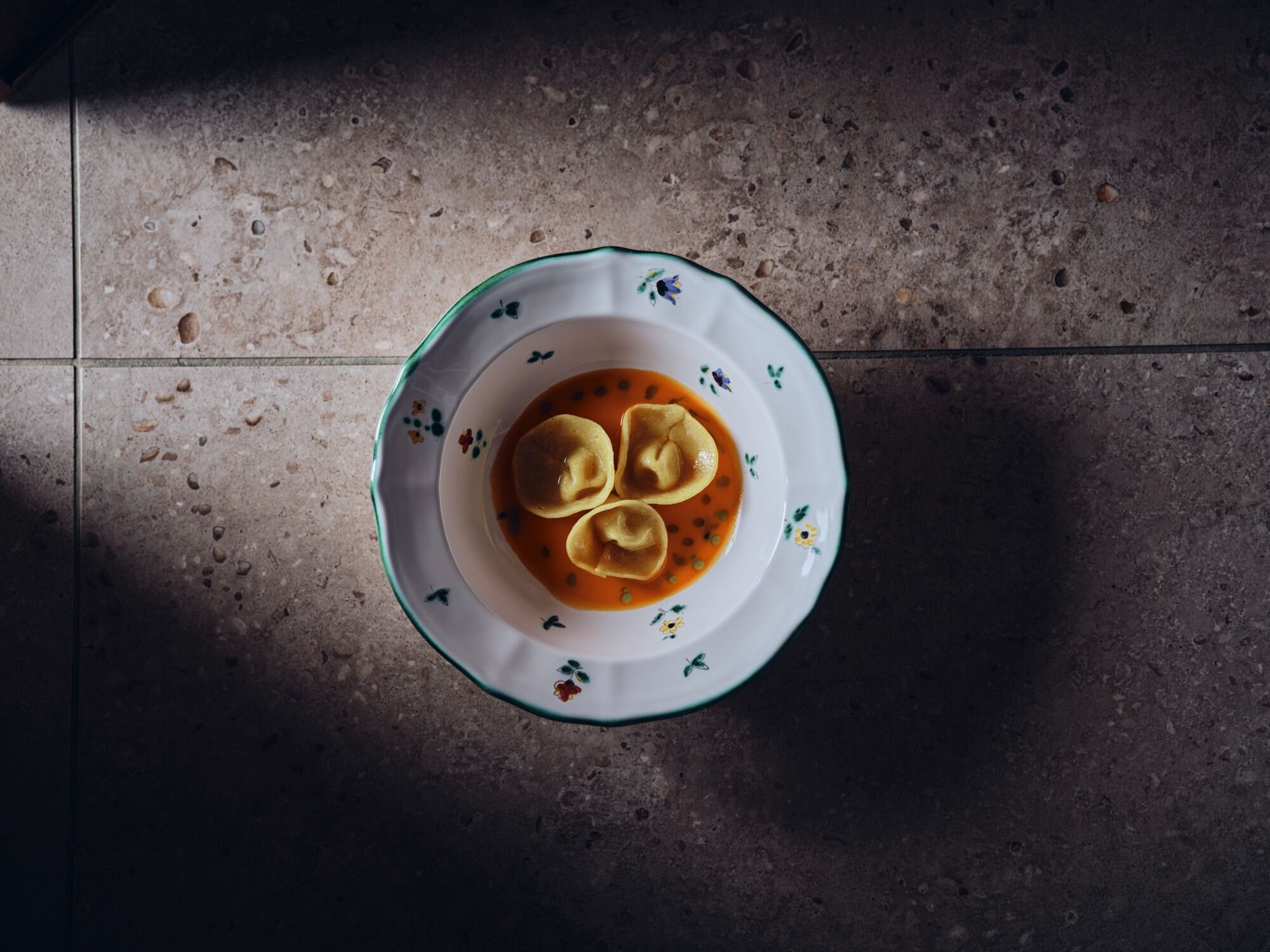
Photo: Suzan Gabrijan
Making the most of what the local landscape has to offer
One by one, delightful bites from the kitchen begin to grace the table—young corn topped with fermented blueberry and young corn cream, buckwheat tartlets filled with shallot cream and roasted mushrooms, and chickpea flour tortillas with thyme cream, pickled black trumpet mushrooms, chanterelles – both fresh and pickled –, and pickled radishes.
The team uses herbs from the garden next to the house and from the forest behind it, along with mushrooms foraged daily by Matic and his team throughout the autumn. “The mushrooms on the plate change all the time—it all depends on what we find that day,” Smonkar explains
The kitchen team draws on the natural resources of their immediate surroundings—the meadows, forests, and nearby fields. Foraging is a key part of life at the Gjerkeš estate—be it mushrooms, wild herbs, berries, or spruce tips. “We preserve and ferment a lot of it for the winter,” says Matic. They have their own fermented black walnuts and also make their own miso, which they blend into butter and serve with hay bread.
Next comes a dish of ravioli filled with goat cheese and green tomato jam, served with a delicate sauce made from tomato water and basil oil. Then follows the butter squash, cooked in hazelnut butter and served with black beluga lentils, black walnut, and a sauce made from freshly pressed pumpkin juice.
The final dish is a creamy, aromatic hay risotto, cooked in a hay-infused stock with hay butter and hay powder, then finished with pollen and toasted hazelnuts.
Photo: Suzan Gabrijan
An important connection to Austria
These dishes blend the contemporary with the traditional, drawing on nature, the seasons, and local producers and ingredients. At the Gjerkeš estate, however, “local” also includes Austria—the border lies just 800 metres away, and Austrians currently make up half of their guests.
“We don’t pay attention to the border. We work with family-run farms. For example, we source our asparagus from a farm just five kilometres away, across the border in Austria, where they grow white, green, and even purple asparagus,” he says.
“When it comes to the style of our dishes, we’re not strictly local—we deliberately avoid recreating typical Prekmurje recipes. But when it comes to ingredients, we stay close to home. Prekmurje has an abundance of excellent ingredients,” explains Matic. “There is no sea food on the menu, for example. We use freshwater fish,” he says, placing a trout roll with hollandaise sauce, trout roe, parsley, and honey in front of us.
This principle also applies to meat, which is sourced from nearby farms and from Panvita MIR (Meat Industry Radgona), a company that also works closely with local producers.
One of them is the Puhan farm stay in the village of Bogojina, run by Matic’s brother Dorian and his wife Katarina. The Puhan estate offers products from its own production, giving guests an authentic Prekmurje culinary experience—from field to plate. They also own 2.5 hectares of vineyards, cultivate 12 hectares of land with wheat, barley, buckwheat, and pumpkins, and raise their own pigs—allowing the Gjerkeš estate to also rely on this close family connection.
Photo: Suzan Gabrijan
Autumn on the plate
Back again to Rogaševci. That day, the main course had an autumnal flavour—pumpkin purée and concassé, along with sweet potato chips, accompanied by a beef fillet cooked in brown butter and finished on the grill, served with a beef bone sauce.
For the pre-dessert, we were served an almond sponge cake with pumpkin seed ice cream, followed by apple mousse with white chocolate glaze, reduced beetroot juice, crumble, and fresh horseradish. The main dessert was a “Ferrero Rocher” ball with chestnut mousse, hazelnut glaze, nasturtium cream, and a sauce made from peppermint, blueberries, blackberries, and raspberries—essentially, berries from the garden behind the house.
The wine in our glasses was replaced by the estate’s own “sustainable” coffee kombucha, made from coffee grounds.
It’s clear that the restaurant at the Gjerkeš estate strives for the highest standards. When asked about their goal, Matic explains that, above all, it’s about developing the surrounding area. “Our main goal is to make our guests happy. The rest is bound to follow. We won’t lie—a star would be nice. But it’s not our main goal. We want to offer a complete culinary experience.”
Photo: Suzan Gabrijan
Stories