A honey experience on the edge of the Krakovski primeval forest
- Words by
- Kaja Sajovic
- Photography by
- Mitja Kobal, Karata Film
December 14, 2020
The morning awakens and the first sunbeams shyly penetrate through the tree-lined alley on the edge of the Krakovski primeval forest, in Hrvaški Brod to be more precise, which is slightly more than 20 kilometres from Novo mesto, the capital of Dolenjska.
The mysterious tranquillity is occasionally interrupted by the chirping of birds in the treetops of oak, common hornbeam and black alder. Silence mixes with the buzzing of a bee tirelessly flying above the trees and gathering pollen.
Photo: Mitja Kobal, Karata Film
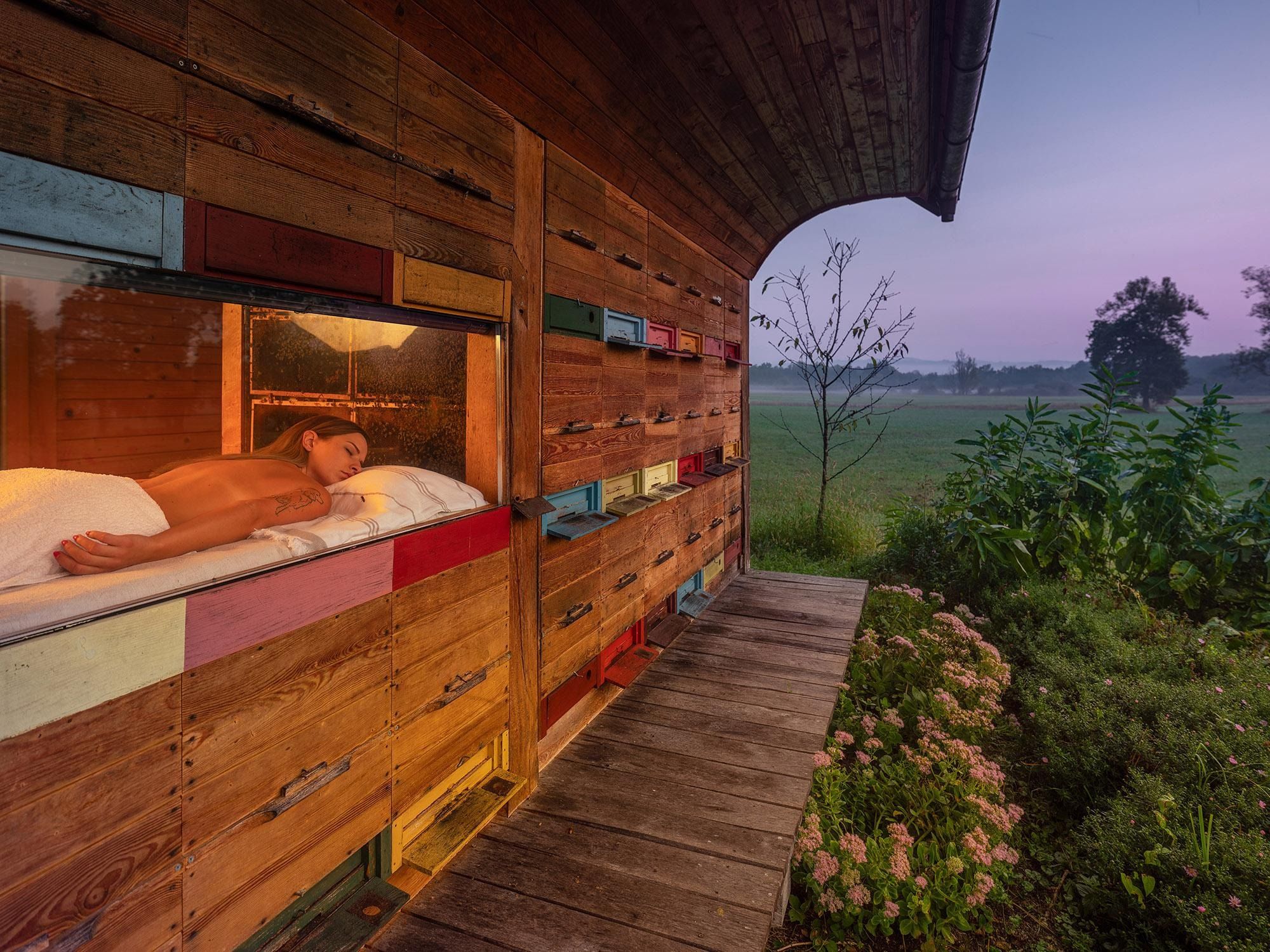
At the end of the alley there is a vast picturesque clearing with a neat beehive surrounded by bunches of diverse flowers in the front and by a lively stream at the back. At first sight, the colour of each front panel of the typical Slovenian beehive is different. This is done merely for decorative purposes, although it gives the beehive a special charm.
The location is far from typical, as the Krakovo forest sits on wetland flooded by the Krka River. Therefore, the beehive can only be reached by boat during the floods. This is also the reason for the lack of luscious blossoming meadows in this area. However, there are mighty 100-year-old chestnuts with flowers where bees can gather nectar for chestnut honey – they must visit several million flowers for one kilogram of honey.
Photo: Mitja Kobal, Karata Film
Beekeeper Andreja
Sunbeams play hide and seek on the wooden landing in front of the beehive. The landing may be accessed by a step brought from the original beehive of her father. Beekeeper Andreja prepares a wood-decay fungus to smoke bees to calm them down so that she can take the comb foundation from the beehive. She stops for a second and her eyes sparkle as she takes a stroll down memory lane.
When her father died, she was in the last year of her biology studies, had a young son, and was allergic to bee stings. But to preserve her heritage, she took over her father’s beehives and the beekeeping activity. “I was told to sell the bees, as I wouldn’t be able to handle them as a woman.” But she persisted and learned how to do it.
Photo: Mitja Kobal, Karata Film
Bees crawl up her arm and face, while Andreja calmly inspects the comb foundation. Years of experience have driven fear away and taught her how to communicate with the bees. She points to the wax covers of the honeycombs: “When the combs are two-thirds covered, it’s time to extract the honey. In the right packaging, organic honey can last for several years and has the longest shelf life of all foodstuffs.”
Today, after working with bees for over 30 years, Andreja has developed immunity to bee stings and added completely new dimensions to beekeeping, making it interesting not only for honey and attracting numerous visitors.
Andreja is the fourth generation of beekeepers in her family, and her children uphold the tradition – daughter Tjaša Medarda, who was coincidentally born on the name day of Saint Medardus, the patron saint of farmers and beekeepers, and sons Anže and Staš. “It isn’t even remotely just about honey. It’s about the Slovenian tradition, which is not only kept alive, but is also developing. From the use of the basic ingredients in the most natural form, for example pollen and royal jelly, to honey as a delicacy, a cosmetic product and a healing and relaxation agent.”
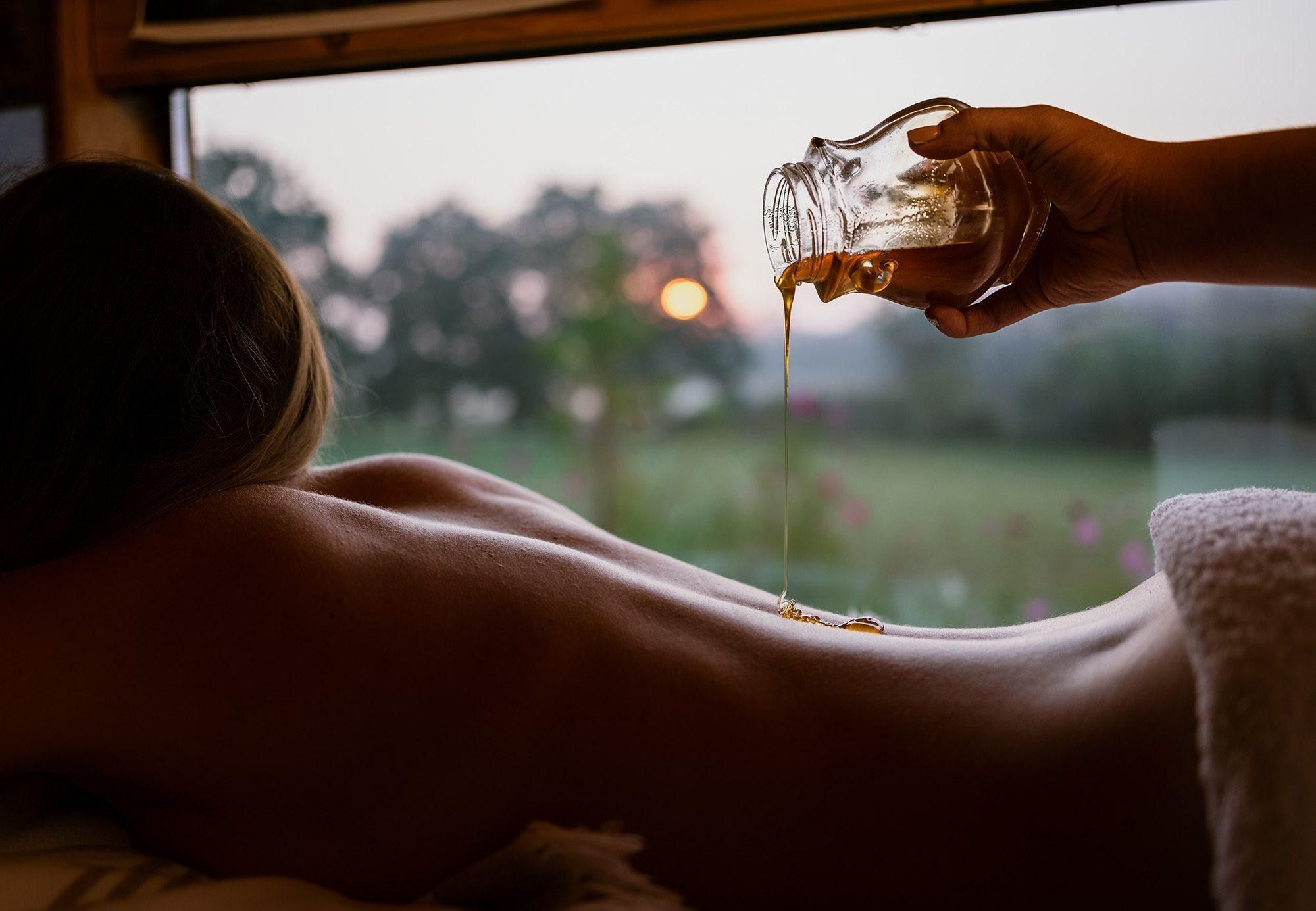
Photo: Mitja Kobal, Karata Film
Apitherapy in a beehive on the edge of a clearing
The wooden landing of the beehive leads to the front door that opens into a 20-square-metre room. The sugary scent of honey is the first thing that hits you. Then you notice the wooden interior, giving you the sense of homeliness and comfort. Carefully framed black and white photos of Andreja’s ancestors found their place on the walls. They were all beekeepers – her father, his mother and grandmother, while on her mother’s side it was men who were engaged in beekeeping.
Photo: Mitja Kobal, Karata Film
Below the photos sits an apitherapy bed by the window, providing a picturesque view of the tranquil nature with a huge meadow and chestnut trees in the distance. On two sides the bed is surrounded by glass walls through which you can watch bees crawling on honeycombs. “The buzzing of the bees is like the murmuring of a waterfall and it prevents stress. Imagine lying on a mat, on beehives, feeling the frequency of the bees, listening to them buzzing, observing, and inhaling the enticing scent of honey. The inhaling of the healthy bee aerosol, which comes straight from the hive through a hose and mask, has a positive effect on allergies and respiratory diseases like bronchitis.”
By the opposite wall, there is a massage bed ready for a honey massage which is combined with the classical massage by Andreja’s daughter Tjaša: “Honey has countless positive effects, including detoxification. For this reason, a honey massage does not only relax, but also detoxifies.” After the massage, she serves you a glass of honey lemonade and a honey pie and prepares a blanket and a mat for you to rest on – on the hives or in a hammock under the ceiling of the beehive. You do not have to hurry, you can take all the time you need to relax. When you finish, you lock the door and leave the key in the agreed place.
Photo: Mitja Kobal, Karata Film
From a honey pie to honeybread
Honey is deemed to be a superfood, as it has anti-inflammatory, regenerative, and soothing effects. It is valued in cooking for its versatility, for which it can be used in desserts, coffee, and lemonade as well as in sophisticated combinations with salads and meat.
Andreja also likes playing with the favours of honey. She combines the classical chestnut flavour with beetroot or the additions of pollen, propolis, and royal jelly. Her Medenjera is also popular. This is a box filled with several types of honey, similar to a chocolate box. Lids are marked with different colours – just like the different colours of the hives in her beehive and the flowers whose honey is hidden in the jars. Novomeška medenjera contains four jars of honey from the area around Novo mesto, while Slovenska medenjera contains nine types of honey from various Slovenian regions.
Photo: Mitja Kobal, Karata Film
Photo: Mitja Kobal, Karata Film
Photo: Mitja Kobal, Karata Film
01/03
On the other side of the two-hectare plot opposite the beehive, there are six mighty oaks with a large 4×4 metre table.
Here, Andreja prepares a honey picnic for her guests: honey roast, yoghurt honey pie, cottage cheese pocket tarts with honey, mini pancakes with honey, honey lemonade, honey sparkling wine, and … Cviček. Sometimes, she also makes honeybread for which she received the Golden Honeybread of the Slovenian Beekeepers’ Association. She neatly packs honeybread for guests to take home.
When she hangs a hammock between the trees the experience is complete. You swing in the hammock while you gaze follows the play of light and shadows in the treetops, have the sweet honey flavour in your mouth and listen to the buzzing of the bees in the distance.
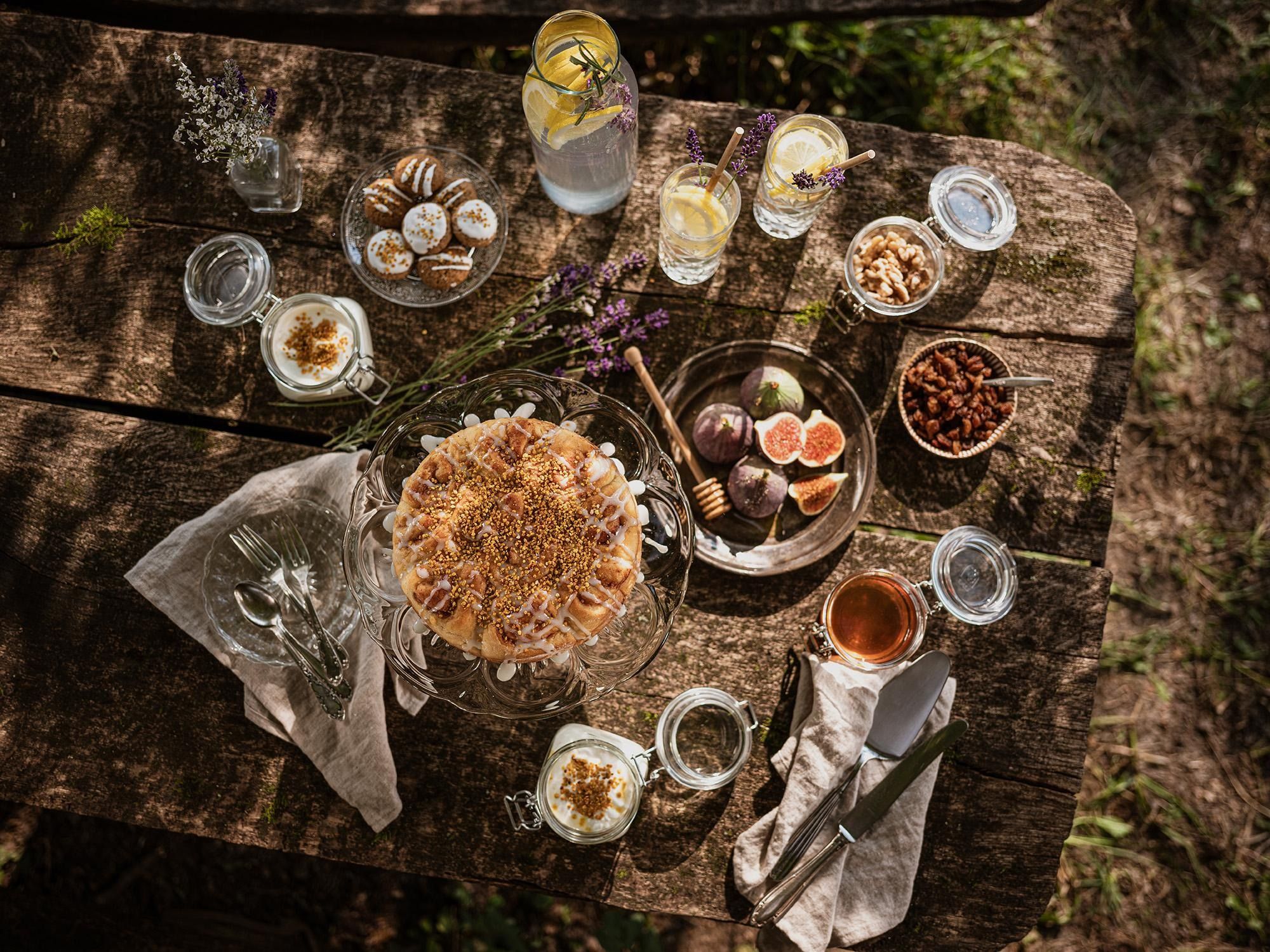
Photo: Mitja Kobal, Karata Film
Apitourism or honey tourism
Andreja is a tireless woman with numerous talents and interests. A biologist and the head of Zavod Čebela is also a keen potter. She makes everything from cups to flower pots, vases and decorative magnets. She has received many awards for her ceramic pots, including for honey storage pots Bear and Bee.
Photo: Mitja Kobal, Karata Film
She is happy when she can pass her knowledge onto other people. For this reason, she regularly hosts groups of visitors, school children or families for whom she organises a pottery workshop in addition to api-experiences and the honey picnic under the mighty oaks in the solitude of the edge of the Krakovo forest. Her visitors design and paint clay pots by themselves, while Andreja puts a finishing touch on the pots and bakes them in the oven. To top it all off, she fills the pots with her honey and sends them to the authors.
Photo: Mitja Kobal, Karata Film
Stories