Restaurant “Pri stričku”: A taste of nostalgia for days gone by, now attracting a younger generation
- Words by
- Kaja Sajovic
- Photography by
- Suzan Gabrijan
August 30, 2024
It's barely 11 o'clock when the first guests, a middle-aged couple, arrive at the restaurant "Pri Stričku" (At Uncle's). "Would you like to start with a shot of one of our homemade spirits?" asks Štefka, the doyen of this charming Ljubljana restaurant in Jarše. The couple nods hesitantly. "We have homemade fruit brandy, but we also have homemade elderflower juice if you prefer," she continues. This restaurant is a rare gem in the capital, staying true to its roots by serving truly authentic Slovenian food.
Despite the influx of modern bistros, Michelin-starred gourmet restaurants, burger joints, pizzerias, falafels stands and tacos takeaways that have popped up around Ljubljana in recent years, the Marincelj family’s restaurant bucks the trend by stubbornly sticking to tradition. This resistance to change has made it one of the city’s most popular eateries.
Photo: Suzan Gabrijan
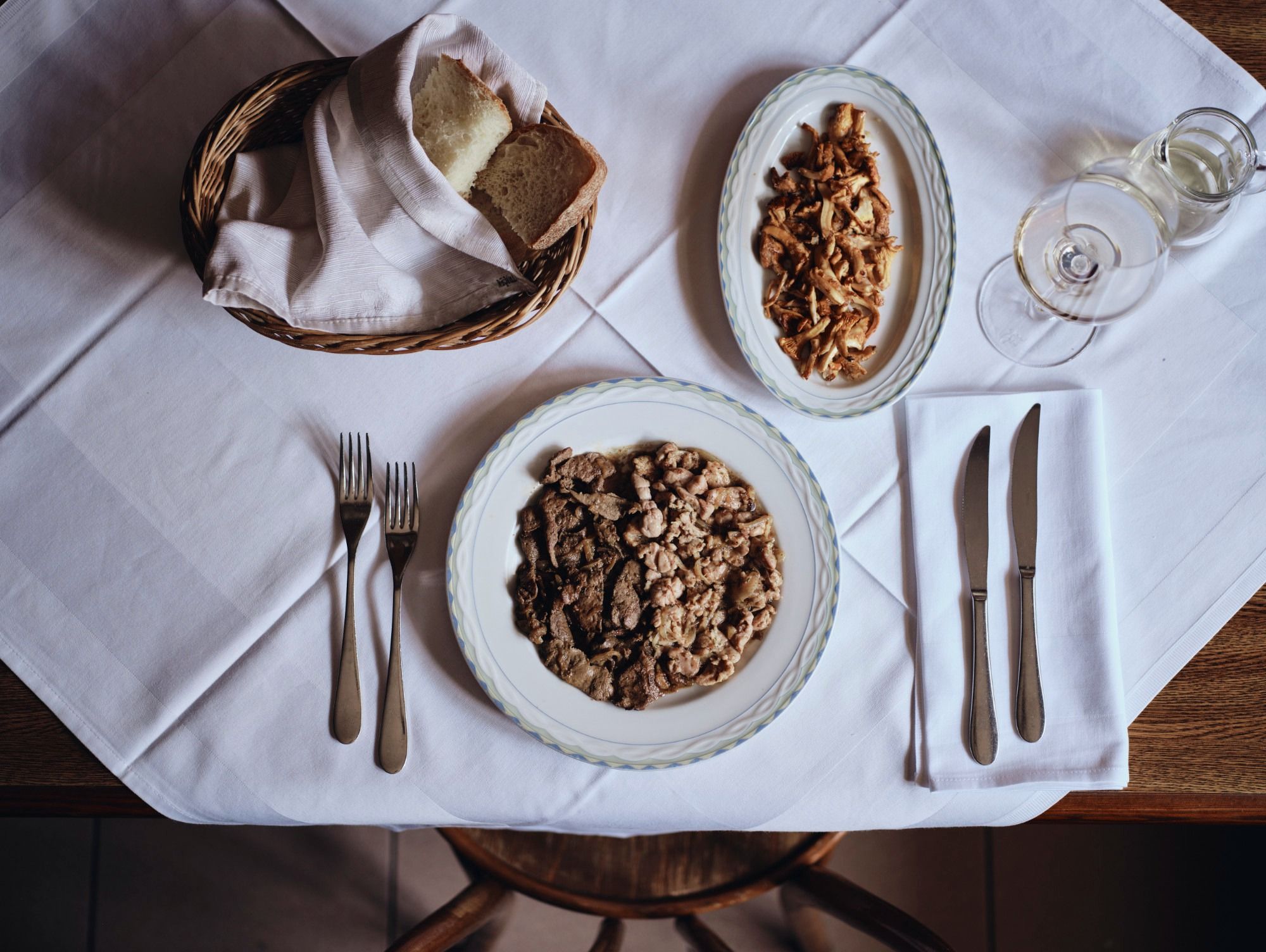
The menu, handwritten daily on a black chalkboard by Štefka, who is in charge of serving the food, offers a mouth-watering array of dishes: “Marinated sardines, courgette patties, chanterelles with eggs, bean stew (pasulj) with meat, veal stew with buckwheat žganci (mash), meat balls in gravy with mashed potatoes, stewed liver with chanterelles, etc.”
She’s here bright and early every morning and stays until the restaurant closes at 5 pm. For an incredible 30 years, she has been serving guests in her classic waiter’s uniform, which comes complete with orthopaedic clogs, a crisp white shirt and a dark blue sleeveless waistcoat. “Today we have stuffed peppers, and I can also make liver with porcini mushrooms for you. If you prefer, there’s tripe or roast… And as a side dish, I recommend our zucchini patties,” she says confidently, tapping a glass pitcher of house Malvazija wine.
The restaurant, located not far from the BTC City shopping centre, was built in its current version by Bojan and Mateja Marincelj. It’s a real family business, with everyone involved: their son Blaž juggles both kitchen duties and serving guests, while his grandparents, although in their 90s, still grow lettuce on the outskirts of Ljubljana and deliver it to the restaurant every morning.
Photo: Suzan Gabrijan
“We have worked all our lives for our children and grandchildren. It gives us great joy to be able to help them and to contribute to the restaurant in any way we can,” says an upright, white-haired gentleman as he moves from one lettuce bed to the next, cutting fresh green radicchio grown in Ljubljana.
He and his wife are still very active, picking elderberries, mushrooms and herbs in the nearby protected forest, drying tea blends and making elderflower syrup and apple cider vinegar from heirloom varieties. In winter, he helps out at the restaurant itself, especially during the sausage-making season.
A salad at “Pri stričku” may sound simple, but it’s all about quality and freshness. They typically mix radicchio with beans, add some cracklings or cabbage if you like, and finish it off with homemade apple cider vinegar. But the real magic is in using fresh vegetables from the garden – you can taste the difference! Blaž tells us that the regulars are so familiar with this salad that some can even tell when the radicchio isn’t from their grandfather’s garden!
Photo: Suzan Gabrijan
The restaurant’s philosophy is simple and straightforward: they don’t aim for Michelin stars, they don’t chase the latest food trends, and they don’t cut corners. Their recipes have remained unchanged since the early days, and they still do everything themselves – from butchering the meat to making pasta, sausages, stocks, dumplings and gnocchi.
“We get half a calf in one piece because we like to do it our own way, cutting it ourselves. In fact, we used to dry-age the meat long before it became a trend. We just hung the calf for a few days.” Blaž explains.
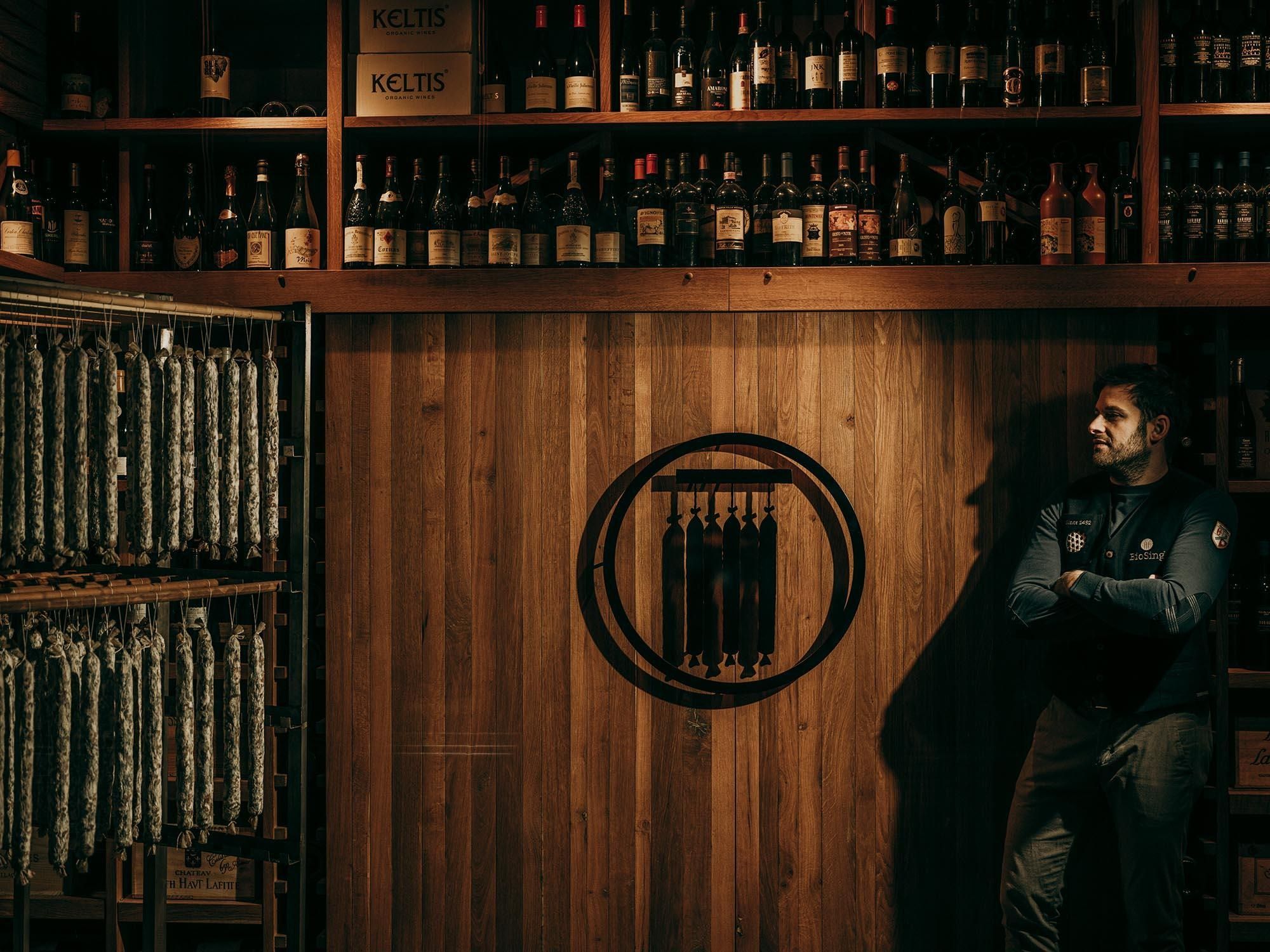
The restaurant has always been more meat-centric, but never more so than in the winter. That’s when the sausage-making season begins, with blood pudding sausages and grilled sausages. Blaž also makes his own dry salami, which he smokes and slices all year round. Making sausages is a much-loved tradition at “Pri stričku”. The day begins early in the morning with shots of juniper brandy in the garage and ends a few hours later with more brandy in the cellar, surrounded by piles of blood pudding sausages. It’s a time-honoured event that brings family and friends together, and as Blaž notes, it’s not just about work – it’s also a very enjoyable social occasion.
Photo: Suzan Gabrijan
The Marincelj family is no stranger to hard work and Blaž also explains, “I don’t find it difficult. We also value having some free time and we believe in a non-profit philosophy, which is something my grandfather always stood for.”
The story of the “Pri stričku” began with Blaž’s great-grandparents, who studied hospitality management in Vienna before gradually settling in Ljubljana, with a brief stopover in Maribor. The Marincelj family took over the house on Kodrova Street after World War II, when it was known more as a tavern than a restaurant. Although the house has changed over the years, one thing has remained constant – the grapevine climbing up the terrace. Bojan still uses the grapes to make a limited amount of wine, which he sells to a select few under the “Pri stričku” label.
The restaurant’s retro interior, with its dark wood, white lace curtains, a long bar, trophy cabinets and personalised booths, transports you to another time and place. In one corner, a brass plaque above a table reads “Vital’s Corner”, with a portrait of Vital Ahačič, the famous accordionist who often played his bellows here and was a regular patron. At the other end of the dining room is the “Firemen Corner”, adding to the restaurant’s unique character.
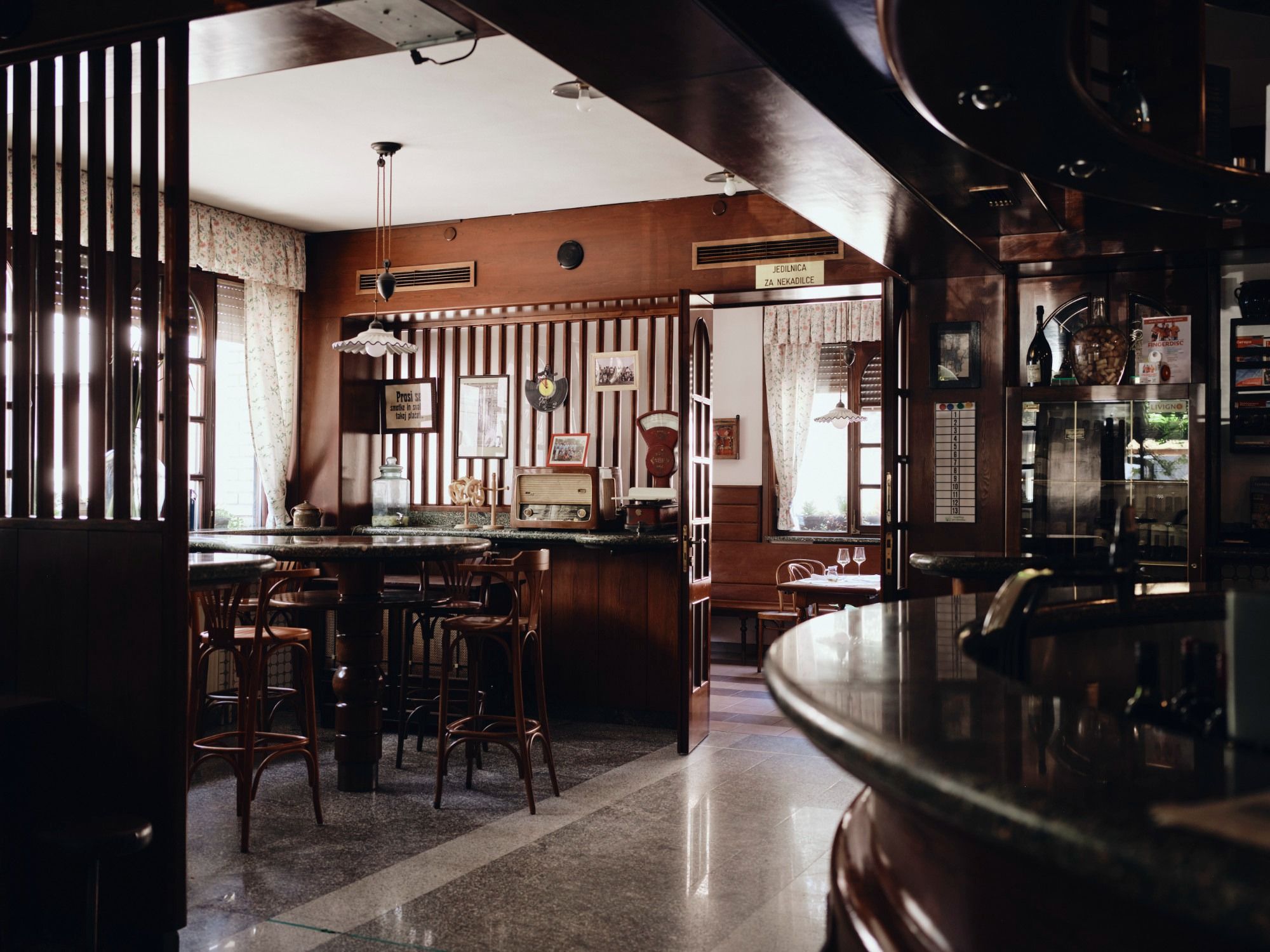
Photo: Suzan Gabrijan
There used to be a butcher’s shop next door, and Štefka still remembers going there to buy tripe. In those days, the restaurant served simple dishes such as garnished eggs, dried ribs and aspic. There were no hot meals, but, as Štefka remembers, “there was a lot more drinking.”
Bojan and Mateja have always been in the restaurant business, and the restaurant has always been a family affair. Today, Bojan handles customer service and purchasing, while Mateja is the powerhouse in the kitchen. Starting her day at 4 am, she prepares everything from soup bases to dough, making sure the restaurant runs like a well-oiled machine during the lunch rush.
Mrs Marincelj believes in learning from the past. She treasures her extensive collection of handwritten recipes from her parents and grandparents, as well as cookbooks, the oldest dating back to the 19th century. She finds it more rewarding to revive simple, old recipes than to create something entirely new.
Photo: Suzan Gabrijan
“We still cook more or less according to grandma and grandpa’s recipes – some of them have fallen out of use, but the liver sausages, for example, are making a comeback after six years,” says Blaž. “We stopped making them after grandpa died. My grandfather used to make stomach salami (želodec) and similar delicacies, but it takes a lot more time and I can’t really do it all,” Blaž explains quickly, as he is already being called to the other end of the restaurant.
It’s noon and the restaurant is bustling. “Would you like a pear brandy as an aperitif?” Štefka asks a larger group in a tone that leaves little room for refusal. The vast majority of the customers, from workers to directors, are locals from the neighbourhood. They come here because they know the service is efficient, ensuring that everyone gets a hearty meal without a long wait.
Simplicity is the name of the game here, and the customers appreciate it. Some of them just like to be spoilt, especially foreigners, for whom Blaž usually puts together his own collection of “favourite dishes”. Regulars have their preferences memorised by Štefka, who calls them by their first names like old friends. Then there are those whose eyes are bigger than their stomachs and who want to try as much as possible; for them, the staff are happy to serve half portions so that they can try everything their hearts desire.
Photo: Suzan Gabrijan
Photo: Suzan Gabrijan
Photo: Suzan Gabrijan
01/03
“Workers come in for stews, while managers usually opt for a more substantial meal with several courses”, Blaž explains.
The menu staples are almost always written on the blackboard by the entrance: beef tongue, calf’s liver mixed with asparagus or mushrooms depending on the season, veal stew, roast veal, aspic, and more.
You will also find dried pork ribs, pan-fried potatoes with onions, salad with cracklings. Occasionally you’ll find sweetbreads fried to perfection, almost buttery on the inside Stews such as bean stew, barley stew and jota (a sauerkraut and bean stew) are popular, and when in season, asparagus and chanterelles make their way into everything from soups to risottos.
If you choose a glass of red or white table wine, bread will be served in a wicker basket in front of you. It’s the familiar white loaf, sliced and reminiscent of childhood. Don’t expect sourdough or other fashionable breads; “Pri stričku” is not interested in modern new trends.
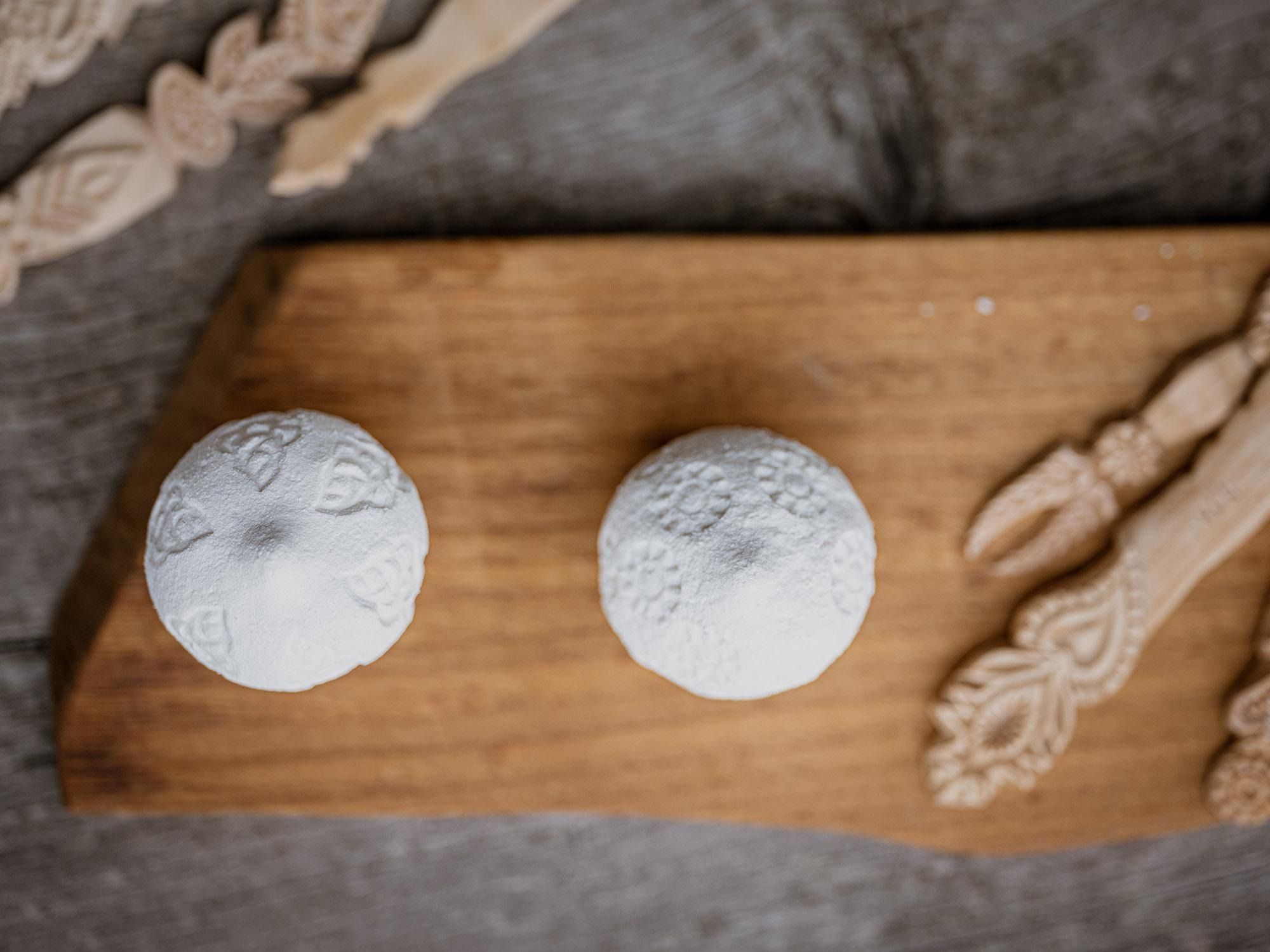
For dessert, strudel and gibanica – a layered cake with apples, poppy seeds, cottage cheese and walnuts – are almost always on the menu at the beginning of the week. They are also famous for their štruklji (rolled dumplings), usually filled with cheese or sometimes tarragon, and always served with a generous layer of butter and breadcrumbs soaked in cinnamon.
Photo: Suzan Gabrijan
Reservations are still usually made by a simple wall-mounted telephone in the kitchen, connected by a cable. Occasionally someone will come in person to make a reservation – just the other day a couple came in to book a table for 17 for the following week. “Can we discuss the menu?” the lady asks casually.
Blaž replies firmly: “This is what we have. There are no exceptions at “Pri stričku”, no matter who you are. Politicians eat here too. “From all parties,” says Štefka.
With regular customers, she already knows their preferences and quirks. “I have a photographic memory, so I usually start by offering them what I know they like best. Some want the part of the veal shank with the marrow, some don’t want cracklings on their salad, some prefer potatoes as a side dish, and some want “shopska” salad (cucumbers, tomatoes, peppers and white cheese) but with feferonis. We are flexible, no problem,” she explains.
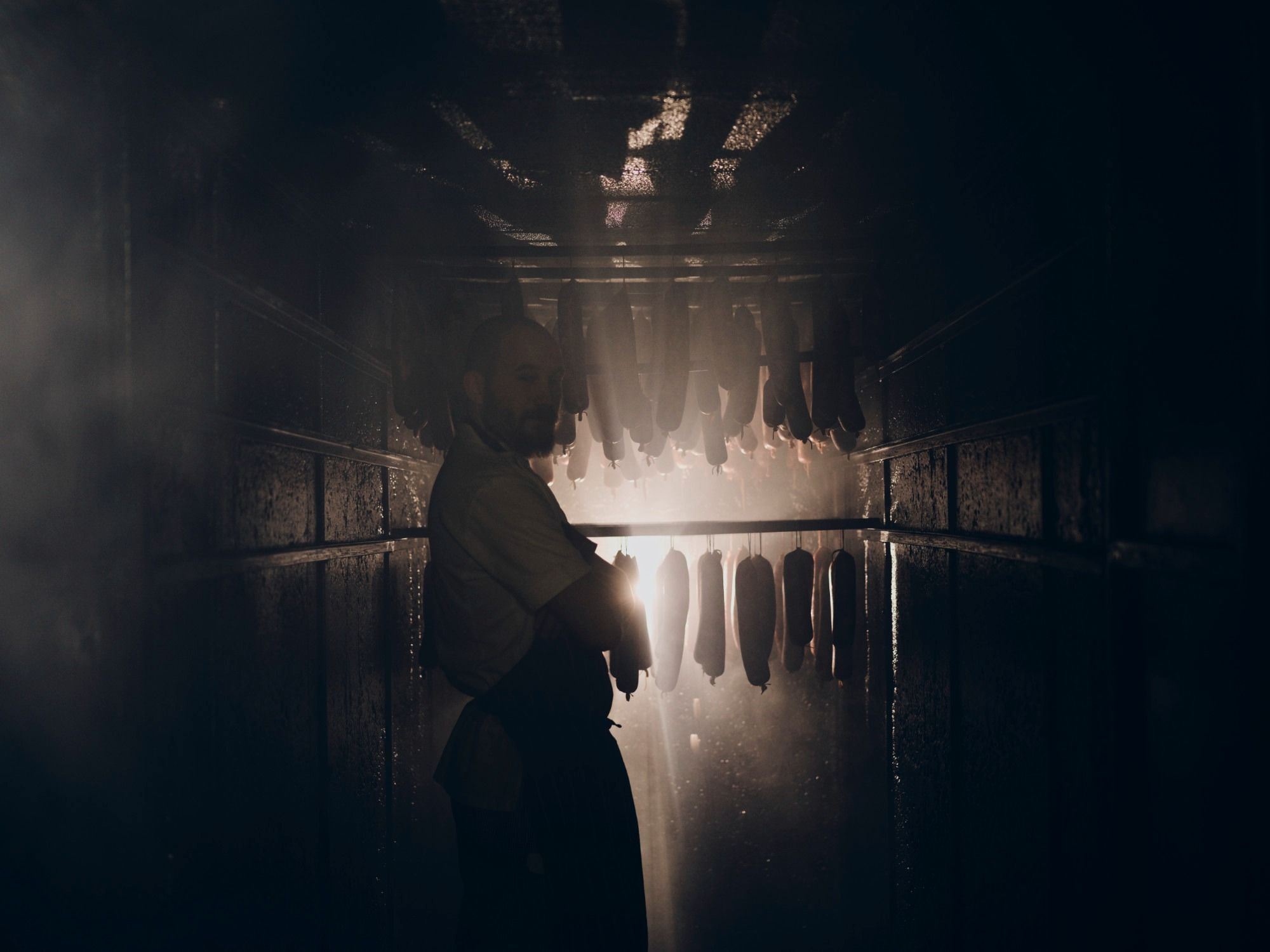
Photo: Suzan Gabrijan
Blaž agrees: “It takes so little to be nice to a guest, to treat them as if you’ve known them for years, to help them know what to order, or to offer them half portions if they want to try more…”
Another guest-friendly touch is the downstairs jukebox room, where Blaž Marincelj Snr also keeps a stash of brandy. “This last drink makes the guests feel comfortable, as if they aren’t just a number. It’s a small gesture that makes a big impression,” says Blaž.
His father is a passionate fan and collector of jukeboxes and they own quite a few. He enjoys repairing and restoring them, and in the afternoons, when things have quietened down a bit, he likes to listen to old tunes in the restaurant. An old friend might drop by for a sausage and a glass of red wine to toast the good old days.
Photo: Suzan Gabrijan
Eden Blaževih boljših kolegov je Jakob Pintar iz Tabara in logično je vprašanje, zakaj se kot mlad in nadobudni kuhar tudi on ni podal v visoko kulinariko. »Cela družina je tu. Zrasel sem s tem. In ko si rojen v družinski posel, imaš temelj, imaš gostilno – za razliko od nekoga, ki šele pride iz gostinske šole in mu je verjetno težje iti v bolj klasično gostilno, saj sta za večino teh fantov večji izziv fine dining in učenje novega,« razlaga.
»Ko sem bil star 20 let, so mi kolegi rekli, to je za staro generacijo, kdo bo hodil na vampe, .. ampak sem vztrajal in se je res spremenilo, zdaj je več zanimanja med mladimi tudi za vampe, radi poskusijo, zanima jih, ni kot pred 15 leti, zdaj so take jedi precej bolj sprejemljivo. Dejstvo je, da nimamo veliko pravih gostiln več. In čim je nečesa malo, postane bolj zanimivo.«
Tudi Štefki še posebej godi, da Strička zdaj odkriva mlada generacija in da ceni tako hrano. »Jedo vse, so pa zanje zakon čufte in filane paprike in pire – ampak pire delamo, kot je treba, po domače, s putrom in kislo smetano. Nič vegete, nič umetnih dodatkov,« pribije odločno.
Kako pa vidi Blaž Strička čez deset let? »Isto. Ta nit mi je najbližja in deluje.«
Photo: Suzan Gabrijan
Photo: Suzan Gabrijan
Photo: Suzan Gabrijan
Photo: Suzan Gabrijan
01/04
Stories