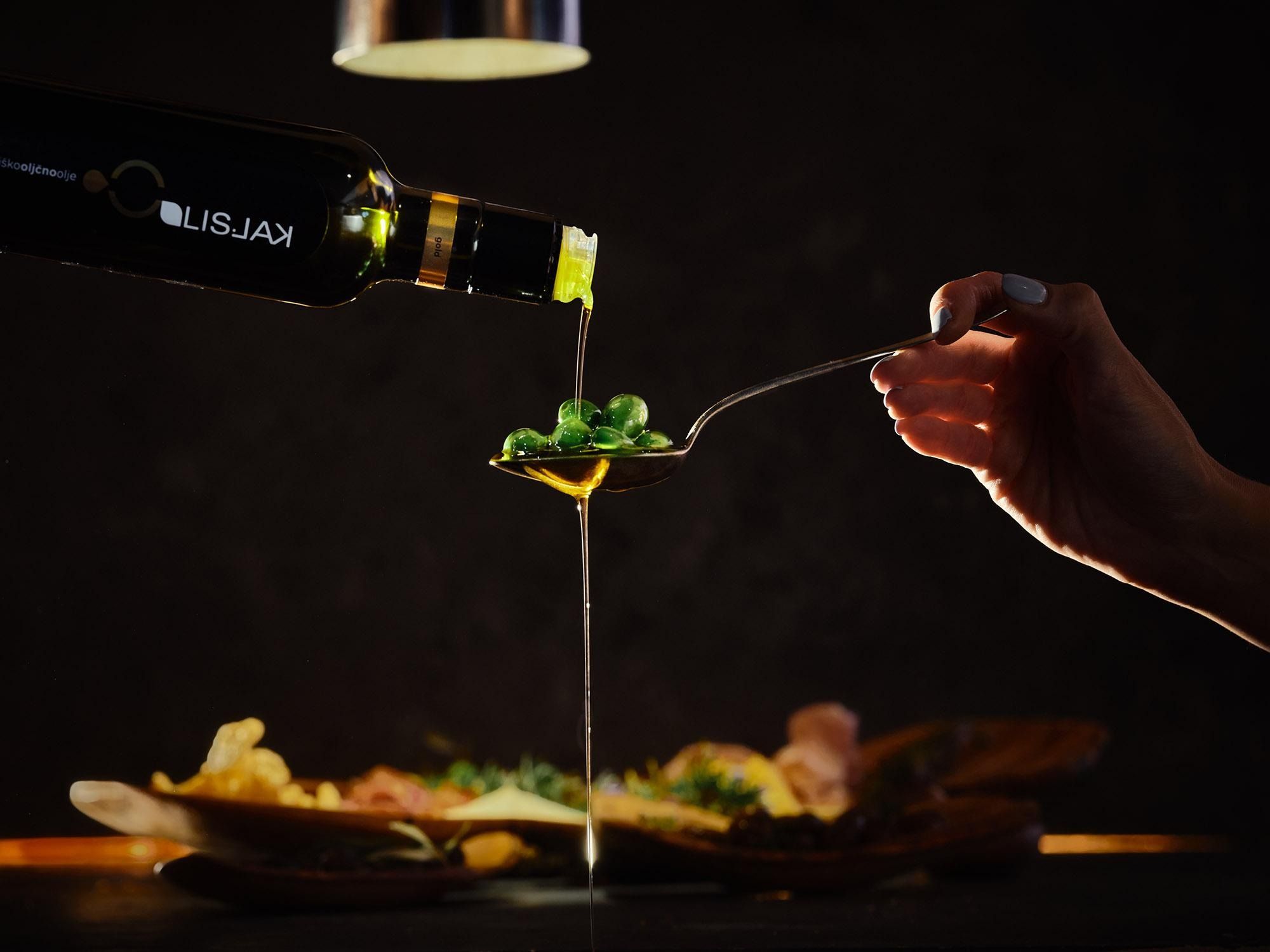
Lisjak Olive Mill: Istrian green gold
- Words by
- Kaja Sajovic
- Photography by
- Mitja Kobal, Karata Film
December 10, 2020
Lisjak Olive Mill is located within easy reach from Koper, in the picturesque Istrian village of Šalara to be more precise. Surrounded by the luscious olive groves and vineyards of Koper’s inland areas, it proudly sits just above the main road towards the Dragonja border crossing and can be reached along a retaining wall made from Istrian sandstone, which is the beginning of the love story with everything local.
In this area, olive trees and the production of olive oil are traditional and have been passed on from generation to generation of the Lisjak family. Initially, they produced olive oil for themselves. In 1992, father Franko built a modern olive mill in Šalara near Koper and began professionally producing it. Today, this is a family business adapted by sons Matej and Gregor with a modern trend and way of life. The cultivation and processing of Istrian olives, which are deemed to be the most prestigious in the world (depending particularly on the terrain in which they grow) is completely organic. “We were the first organic olive mill in Slovenia,” says younger Matej.
Photo: Mitja Kobal, Karata Film
For Lisjaks, whose olive groves sometimes flirt with the Strunjan sea and basking in the sun in the inland areas, ecology plays an important role. “We don’t discard anything from the olive trees. We make tea from olive leaves, the flesh of olives that remains after squeezing is used to make animal fodder and water is used in biogas production. We use olive stones for heating in all our buildings,” Matej reaches among the olive stones, a very effective biomass whose power is ranked between that of pellets and natural gas.
Photo: Mitja Kobal, Karata Film
The green gold of the Lisjak family
Green gold, as olive oil is called, has a special place in cooking and has not only been part of Mediterranean cuisine. This area is home to indigenous varieties, such as Istrian White, which are over 300 years old and must be preserved as such. Their fruit is high quality and pristine and is turned into top-quality oil using the safest procedures.
Several types of oil are produced at Lisjak Olive Mill. Their oils are exclusive (made from only one variety of olive) or blends of several varieties of olive trees, and the most prestigious is Gold, a blend of old Istrian varieties that had to fight to survive. These oils are aromatic, fruity and spicy and have a strong character.
Olive oil is assessed by quality, colour and flavour with the best of them receiving prestigious awards and are ranked among the best in the world.
Slovenian Lisjak olive oil is at the very top.
Photo: Mitja Kobal, Karata Film
Olive groves
A walk through the olive groves is soothing. The characteristic olive green colour of leaves through which sunbeams permeate and green and black olives, which remind you that the time is right to lay a picnic blanket on the ground, take a slice of fresh bread generously dipped in the aromatic olive oil and listen to Matej’s explanation: “Our olive groves on multiple locations on ten hectares of land are home to over a thousand trees. They represent 27 indigenous varieties with the most characteristic Istrian White, Buža, Leccino and others. Olives are hand-picked once a year. Our speciality is picking and processing olives in a mere four hours. In this way, the freshness of the oil and the fruitiness and vitamin content of olives are preserved. Time is of the essence in the processing procedure, as olives oxidise, resulting in poorer quality and flavour.”
They keep looking for technological improvements, which helped them to upgrade the oil storage process. “After filtering, the oil is stored in stainless steel tanks with nitrogen so that air cannot reach it,” he says, expressing his pride.
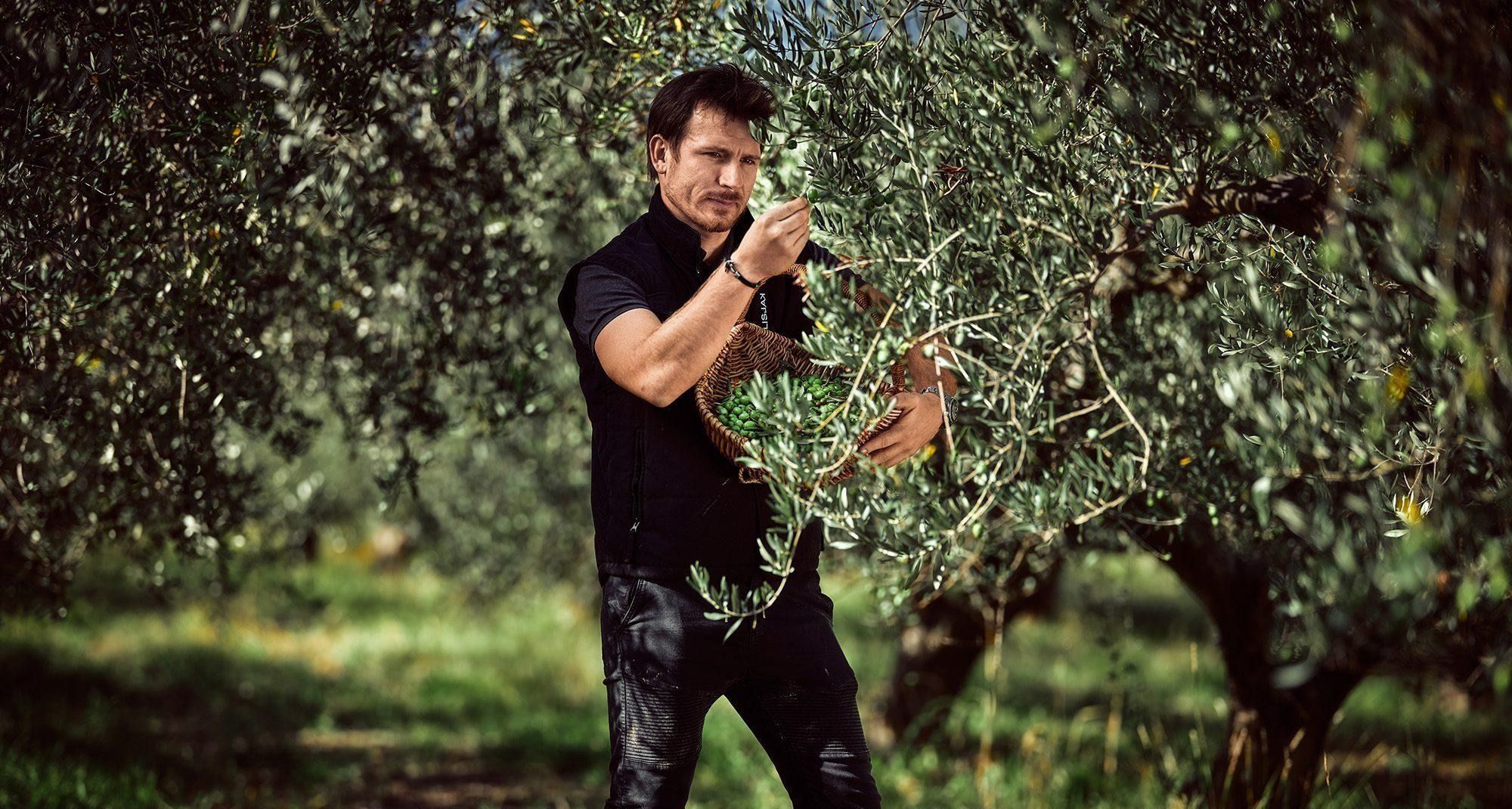
Photo: Mitja Kobal, Karata Film
Lisjak Olive Mill
Olives travel from olive groves to one of the mills. The Lisjaks have two olive mills – one in Šalara run by Matej and one in Krkavče run by his brother Gregor.
In Šalara, Torkla made from Istrian sandstone instantly captivates you with a combination of local elements, such as olive wood and stone from the area and modern design with large glass surfaces revealing the exhibition and tasting room on the upper floor, with bottling and packaging rooms in the cellar.
Photo: Mitja Kobal, Karata Film
Both oil mills are equipped with state-of-the-art machines developed by the leading Italian oil equipment factory in cooperation with the Lisjak family. Between them, they produce around 150,000 litres of oil annually: “Everything depends on various factors – from the age of the olive trees, vintage, position, and variety. One tree may produce half a litre to ten litres of olive oil.”
Also crucial for oil quality is suitable storage at controlled temperature, in the dark and with nitrogen to prevent oxidation. Unlike wine that must age, nothing should be done with oil. Before it is poured into barrels, oil is filtered, otherwise sediment would ferment and spoil it.
Photo: Mitja Kobal, Karata Film
Gourmet olive oil
As he walks among bottles of top-quality olive oil, Matej explains how the flavoured olive oil line came to life: “Modern cuisine, Michelin stars and cooking as a popular hobby require new flavours. We basically began with oil, how to use it, and built on that. This resulted in oils flavoured with truffles, chilli, orange, lemon and garlic. Their production is expensive, as it is difficult to obtain the right fruits for them (they get organically produced lemons and oranges from Sicily) and the procedure that includes mixing and centrifugation is complex.”
Our greatest speciality is a unique blend of Lisjak olive oil and pumpkin seed oil from Kocbek Oil Mill. “Slovenia is the only country in the world where both olive and pumpkin seed oils are pressed. It took Gorazd (Kocbek) and myself a long time to find the right quantity ratio between olive and pumpkin seed oil – preventing one flavour from overriding the other one. The blend is pleasant and numerous famous chefs love it.”
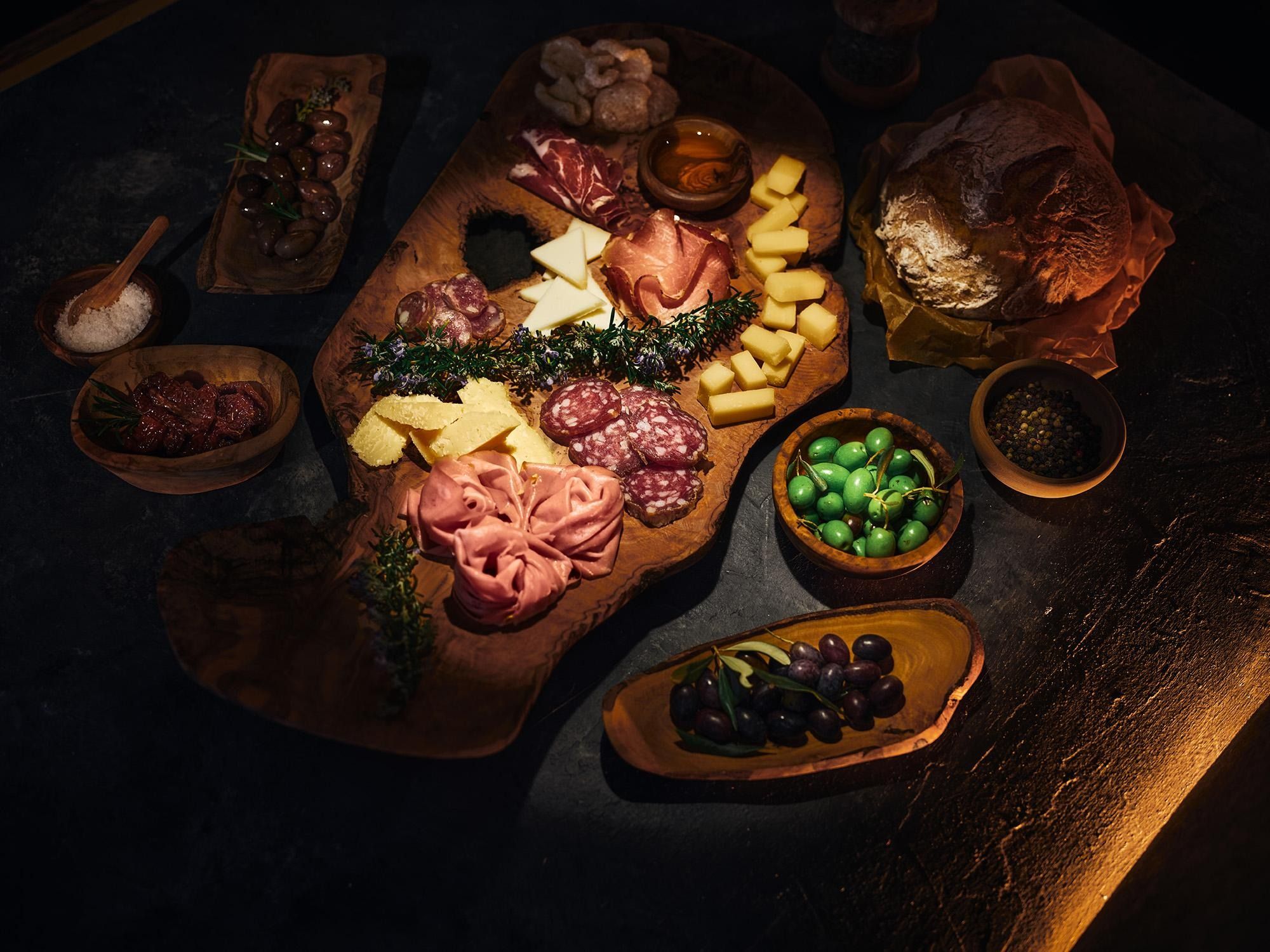
Photo: Mitja Kobal, Karata Film
World class
The Lisjaks cooperate with world-class restaurants and chefs both in Slovenia and abroad with their olive oil. “There are too many of them to point out only one without doing an injustice to others,” Matej defends, although his Veronika reveals that their oil is used by chefs at Burj al Arab and Burj Khalifa, the Slovenian national cooking team and the world-famous chef Thomas A. Gugler, who created their oil Poison.
And the favourite dish in combination with Lisjak olive oil? They both have the same favourite – Morsko dno pasta with a smidgen of oil with chilli prepared by chef Ivek at the restaurant of Hotel Marina in Izola.
Photo: Mitja Kobal, Karata Film
(Olive) Oil production
Vans of different colours, which were characteristic of this region in the 1980s, attract attention in front of the oil production centre. “At first, we had one van that we used for work in olive groves and the olive mill. When visitors began to arrive, it turned out that it was a real attraction for them. For this reason, my brother and I decided to expand our activity with tourist products and services,” says Matej, not hiding his fascination with vintage vans with renovated interiors with his olive wood.
Photo: Mitja Kobal, Karata Film
They use these wonderful colourful vintage vans to take their guests for the special ‘Vintage Gourmet Tour’ through the olive tradition of Slovenian Istria, which is among certified five-star experiences. Nothing can beat the feeling of nostalgia combined with a tasting of the best olive oils, local wines and typical Istrian fuži with truffles.
Photo: Mitja Kobal, Karata Film
Photo: Mitja Kobal, Karata Film
Photo: Mitja Kobal, Karata Film
01/03
Stories